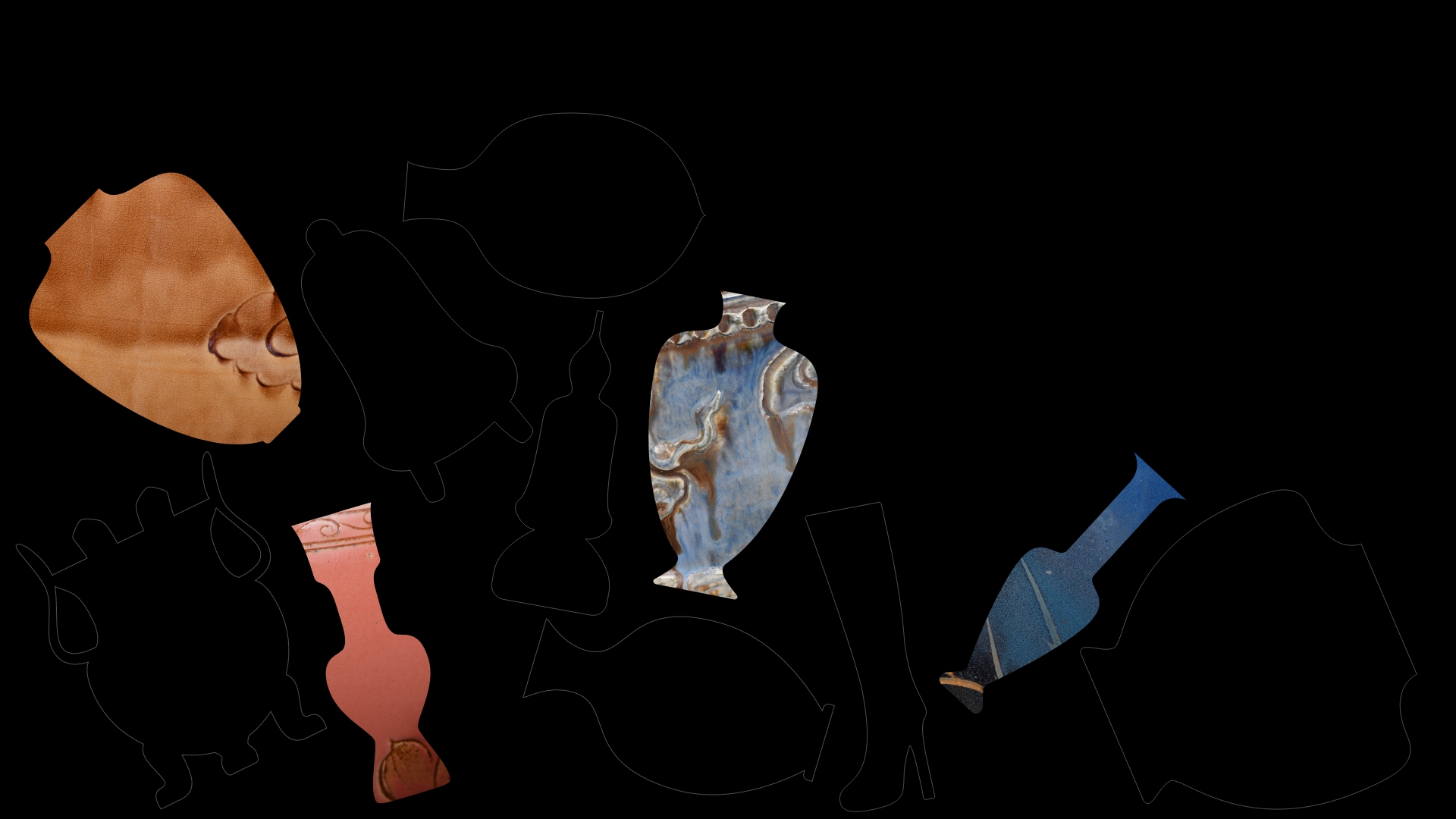
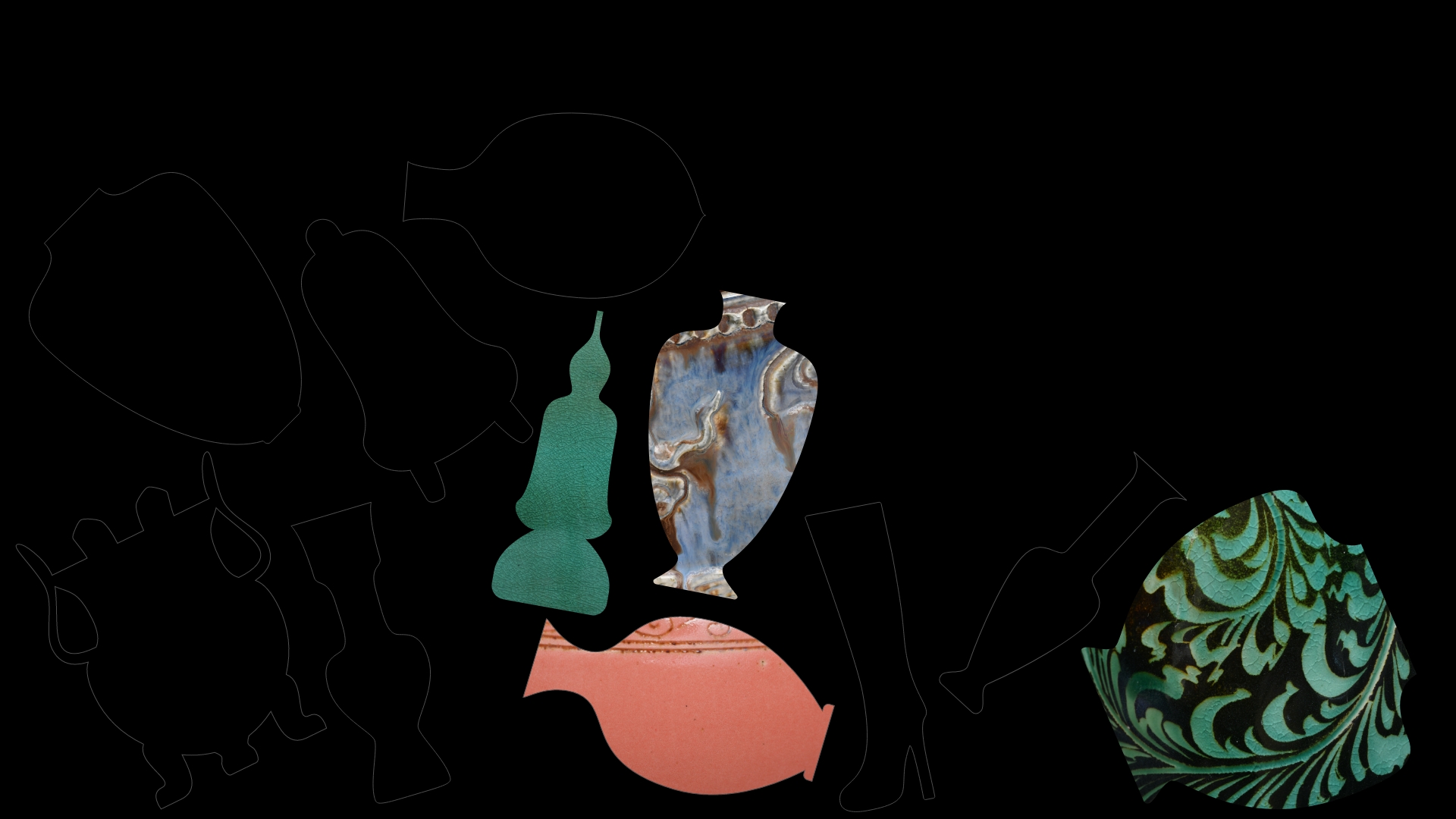
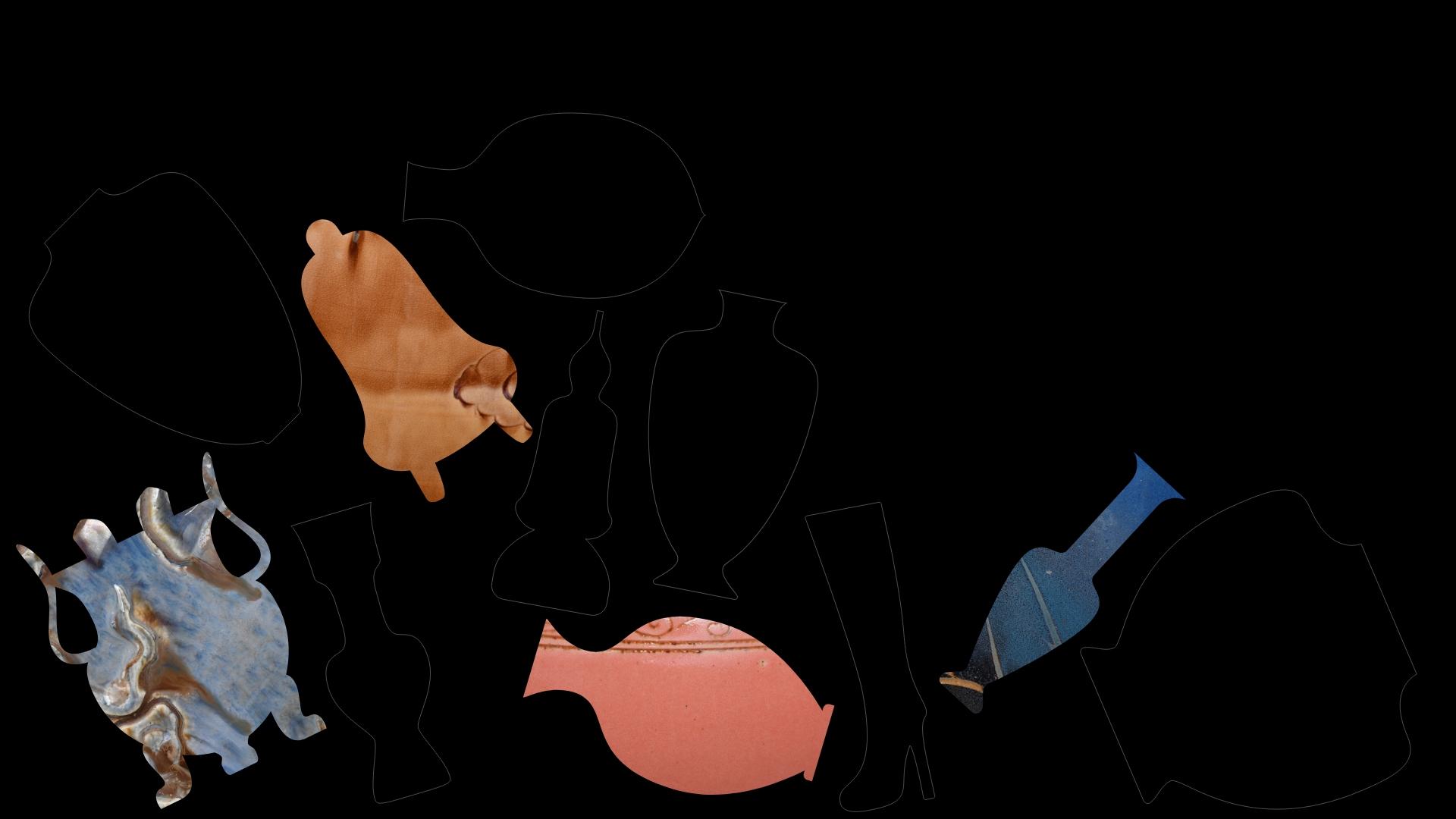
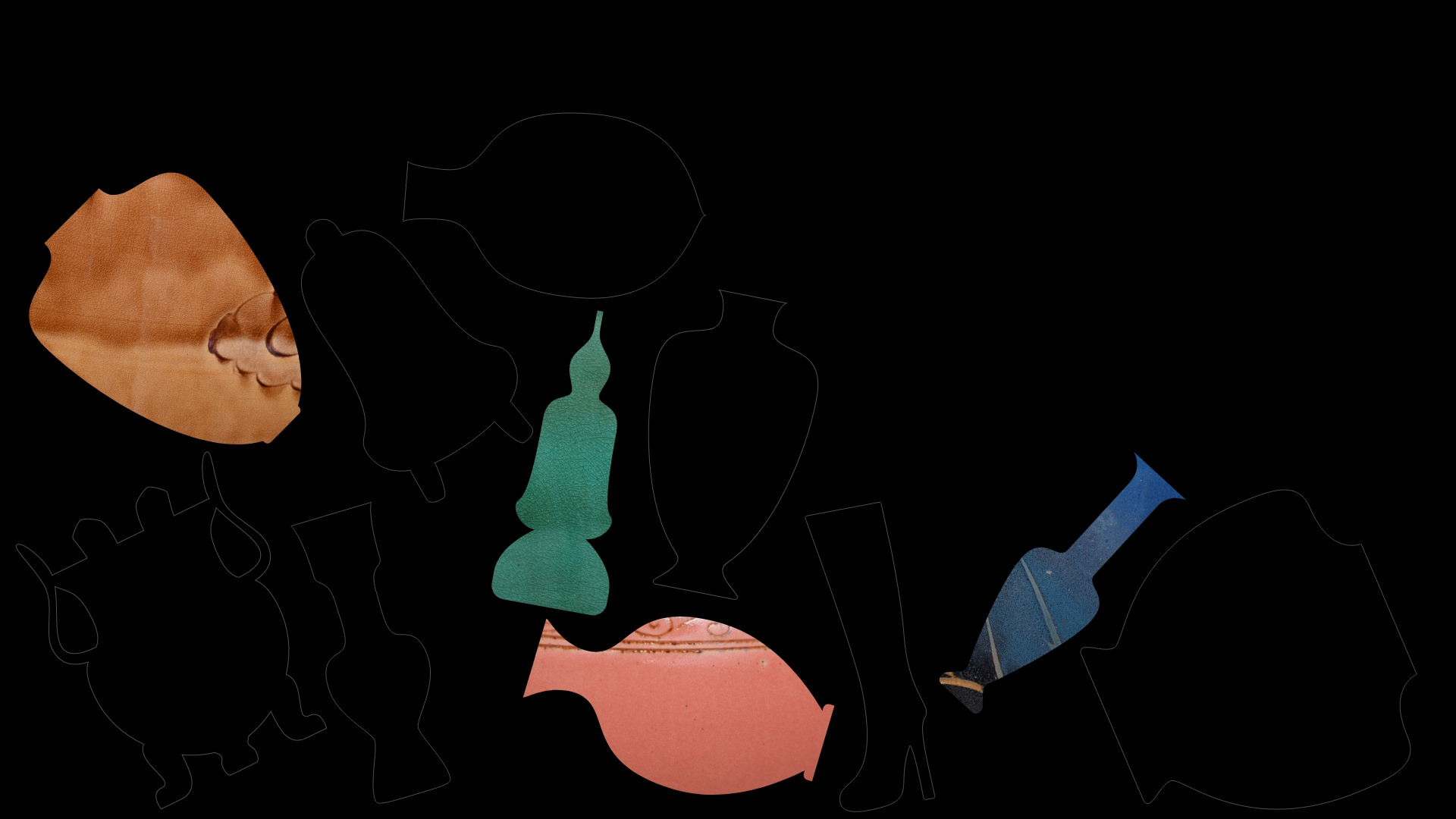
In today’s landscape of design and art, heritage is no longer a static archive. It becomes a living material—continuously reinterpreted, negotiated, and renewed through creative practice. In the case of ceramics, one of the most enduring and memory-laden mediums in Vietnamese culture, this continuity demands not only technical mastery, but also a professional ethos and a deep cultural sensibility.
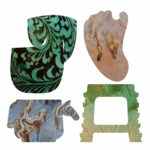
The feature “Women Designers in Dialogue with Ceramic Heritage,” by Bát Tràng Museum Journal, presents four practitioners working across fashion, architecture, installation, and product design. For each, a professional trajectory is not only defined by milestones, but by an ongoing search for points of contact with tradition.
This dialogue is not about repeating established forms, but about asking a fundamental question: how can heritage remain present in contemporary life? And how do women—through sensitivity, resilience, and a capacity for mediation—enter this conversation?
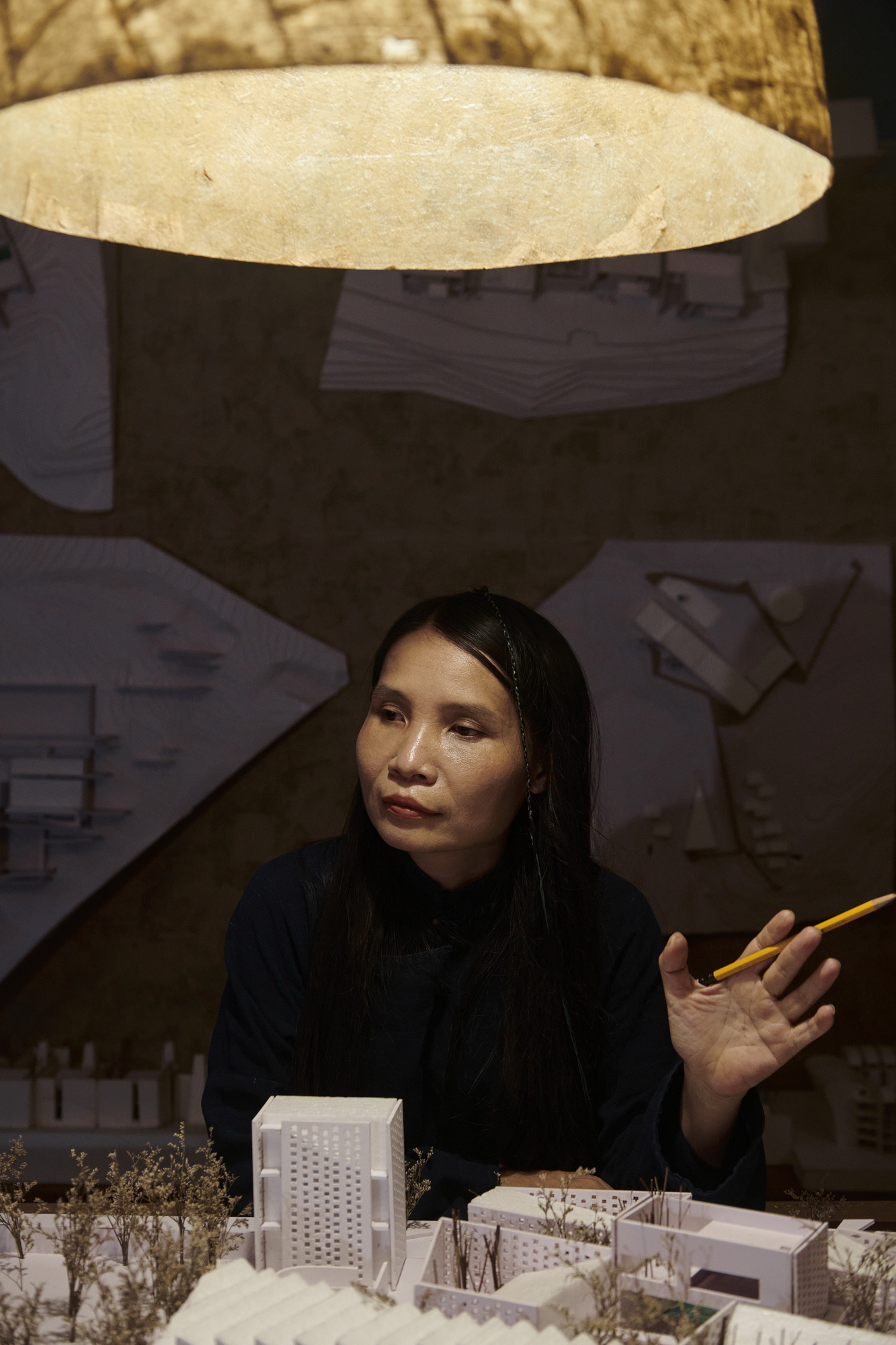
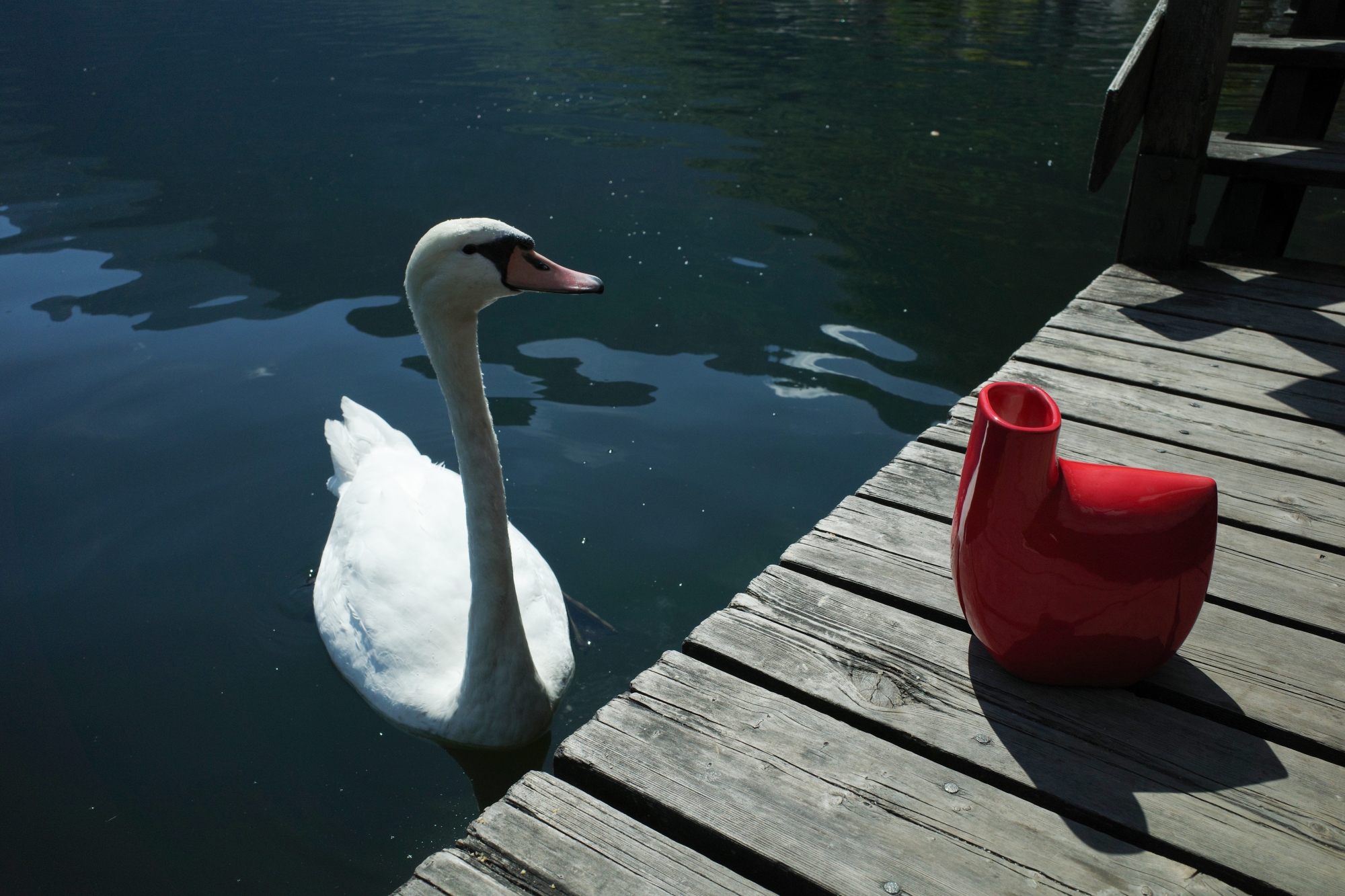
To sustain an interdisciplinary practice, architect Nguyễn Hà has developed a creative ecosystem comprising ARB (Architecture), BEAULO (Object Design), and MM Lab (Material Research). Within this system, BEAULO operates as an open experimental space, where cross-disciplinary research is translated into objects at a smaller scale than architectural works.
Here, the boundary between tradition and industry is deliberately blurred. Materials range from ceramics and paper to composites and industrial piping, as long as they enable a process of open-ended experimentation.

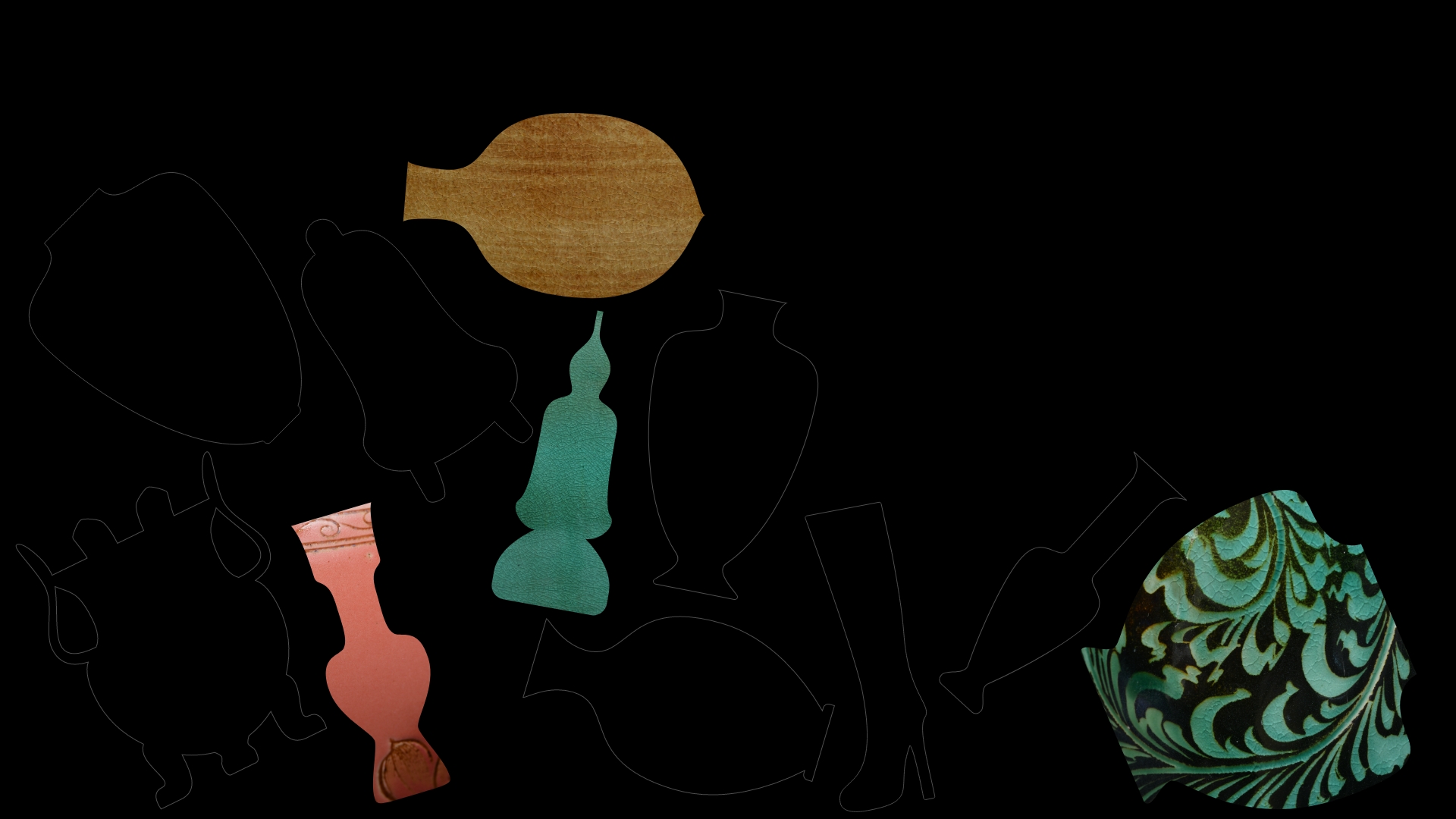
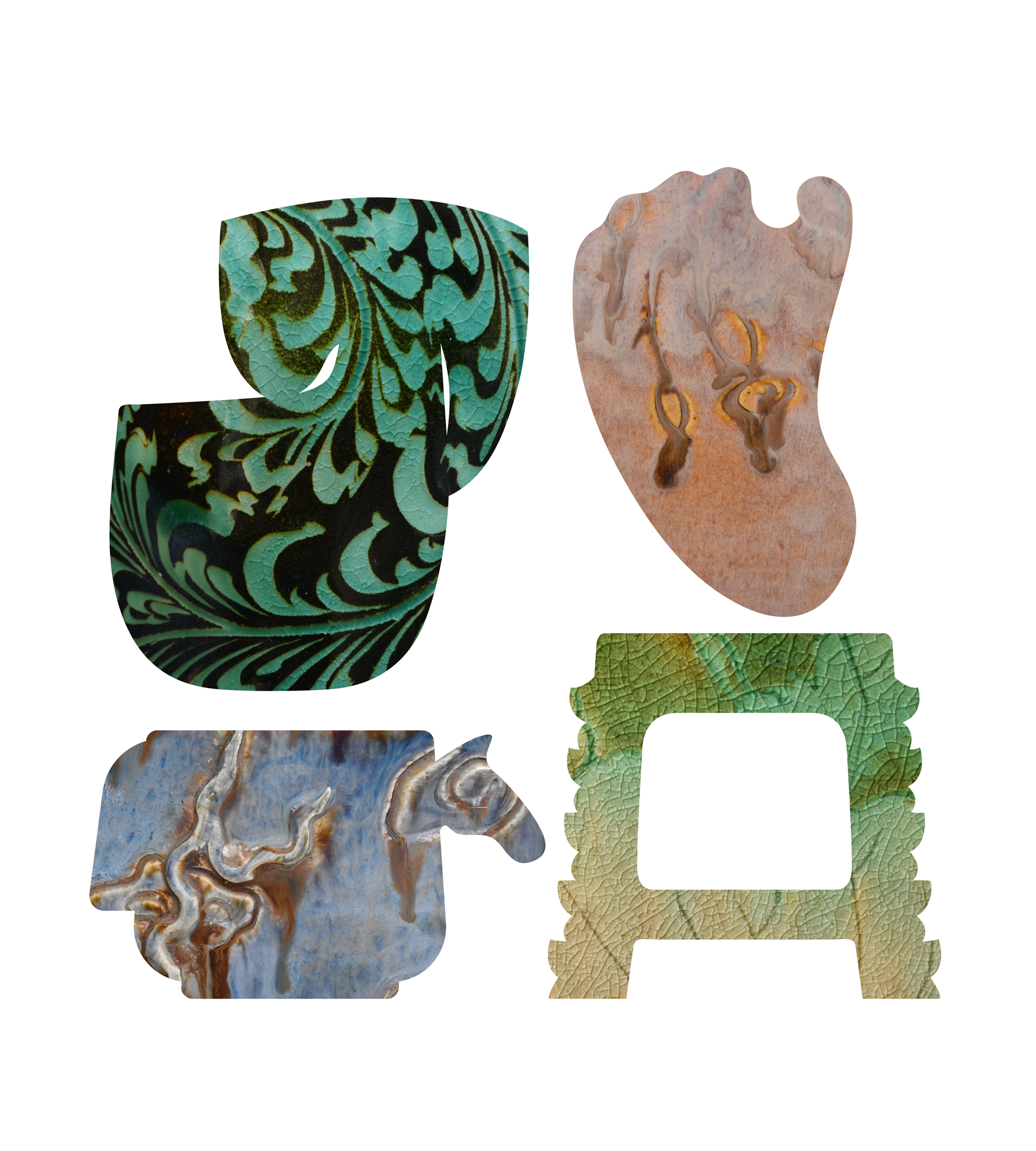
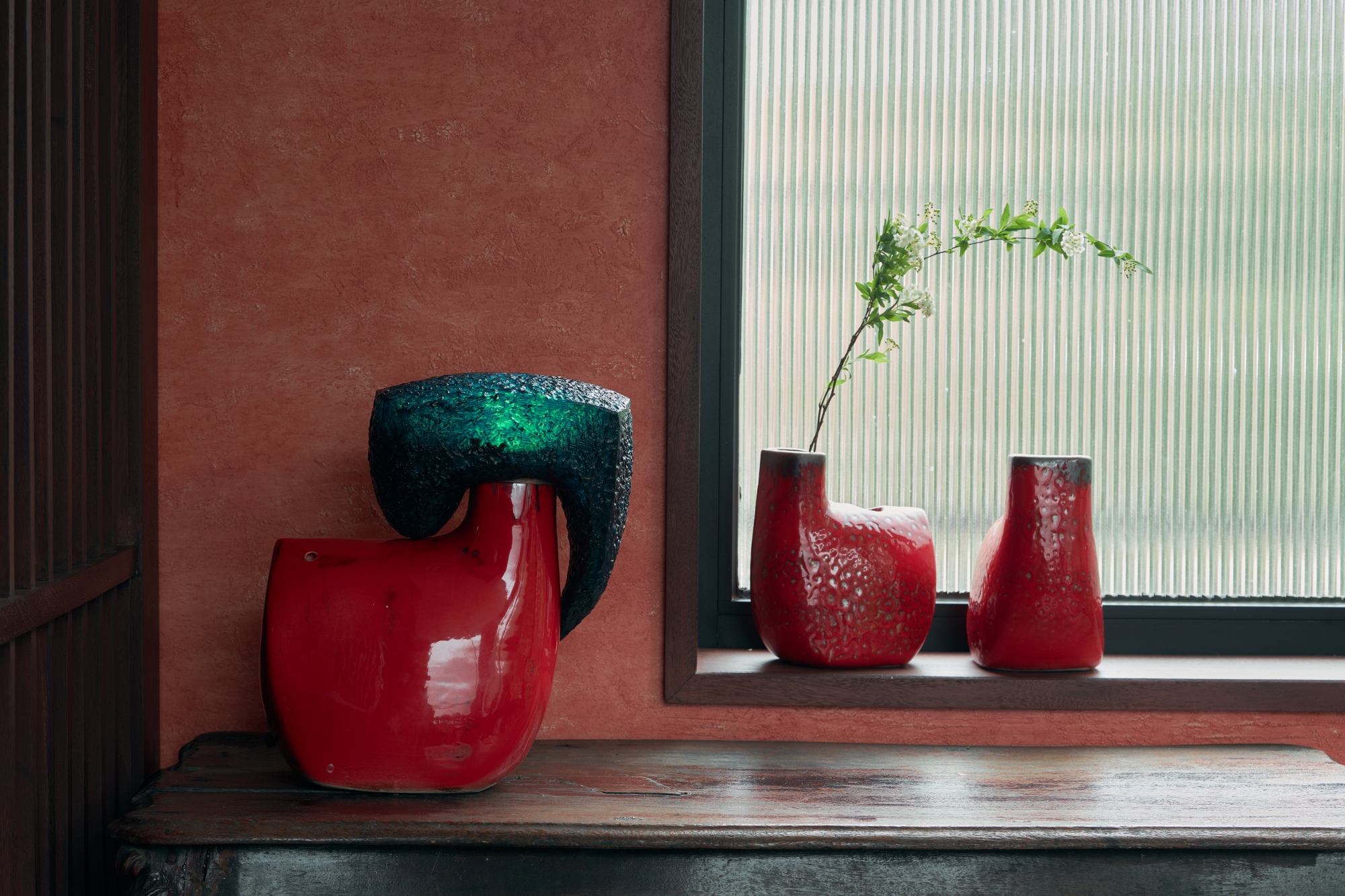
Her collaboration with BTMA began with an unusual ceramic form by the late People’s Artisan Vũ Thắng. From this starting point, Nguyễn Hà developed the Con Vịt (Duck) Collection, approaching the object not as decoration but as a spatial agent.
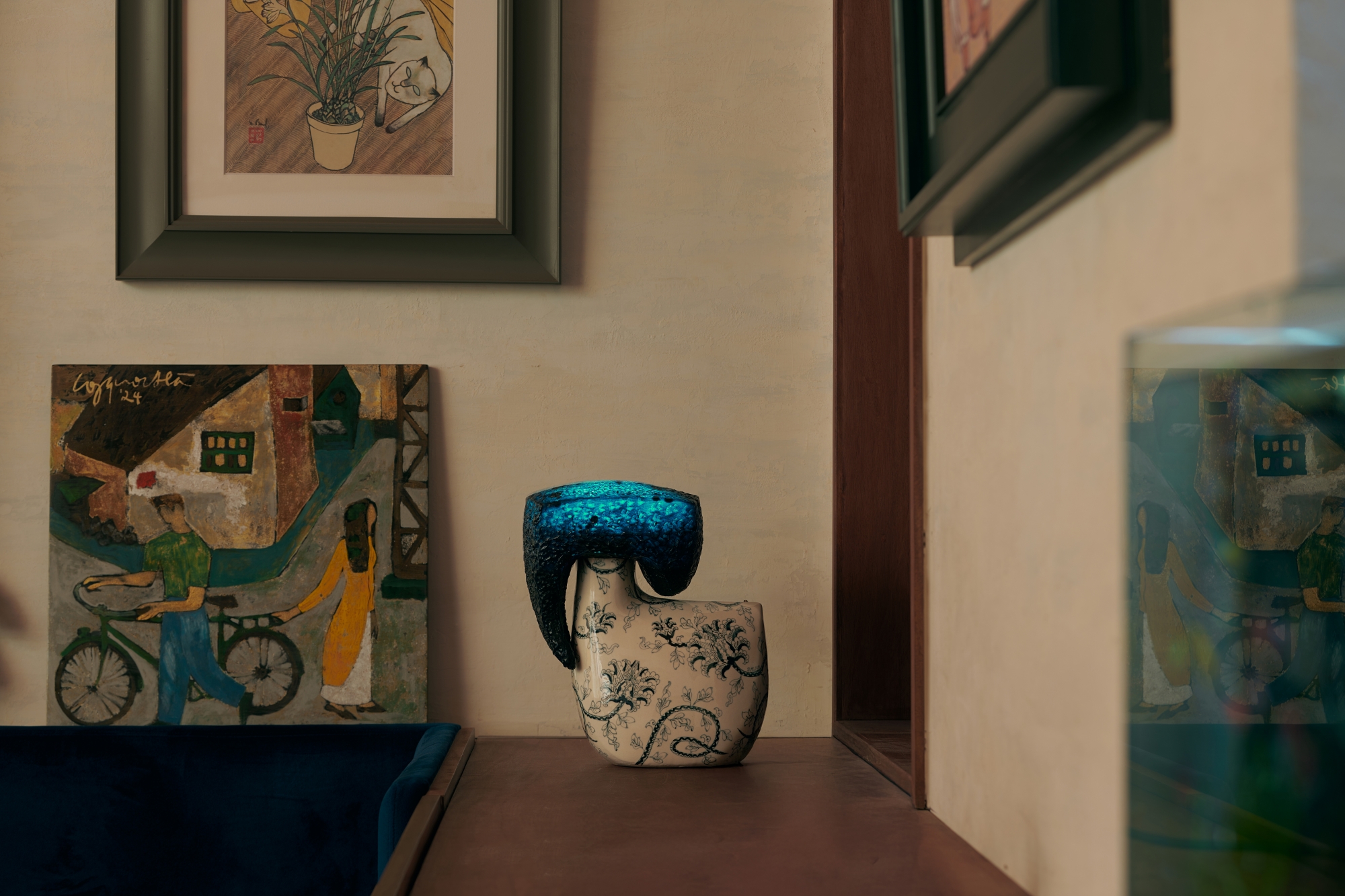
Across scales, the form can function as a large sculptural piece, a vase, a table lamp, or a small incense holder. Through structural inversion and shifts in proportion, architectural thinking is condensed into ceramic form, repositioning familiar objects within a new visual context.
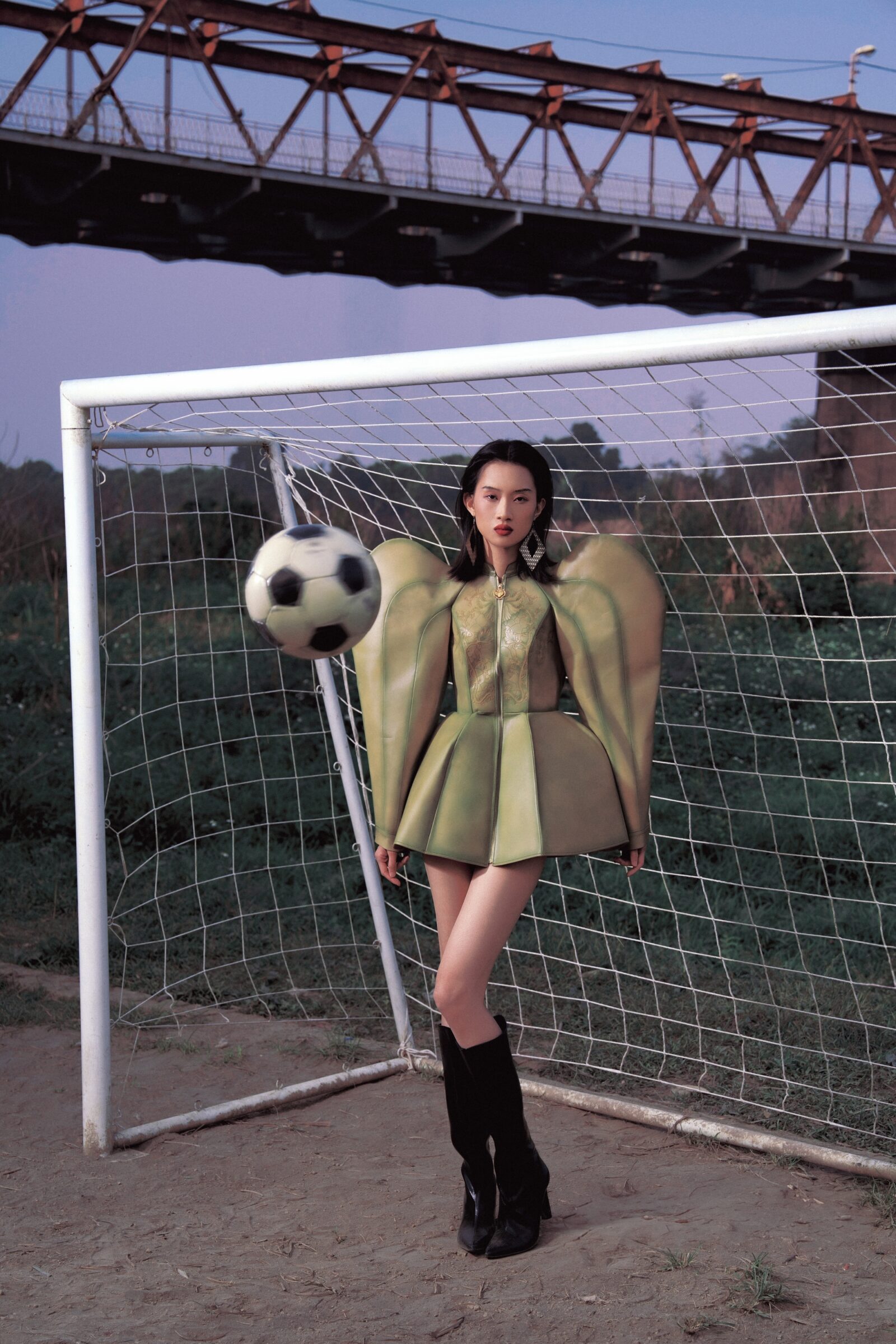
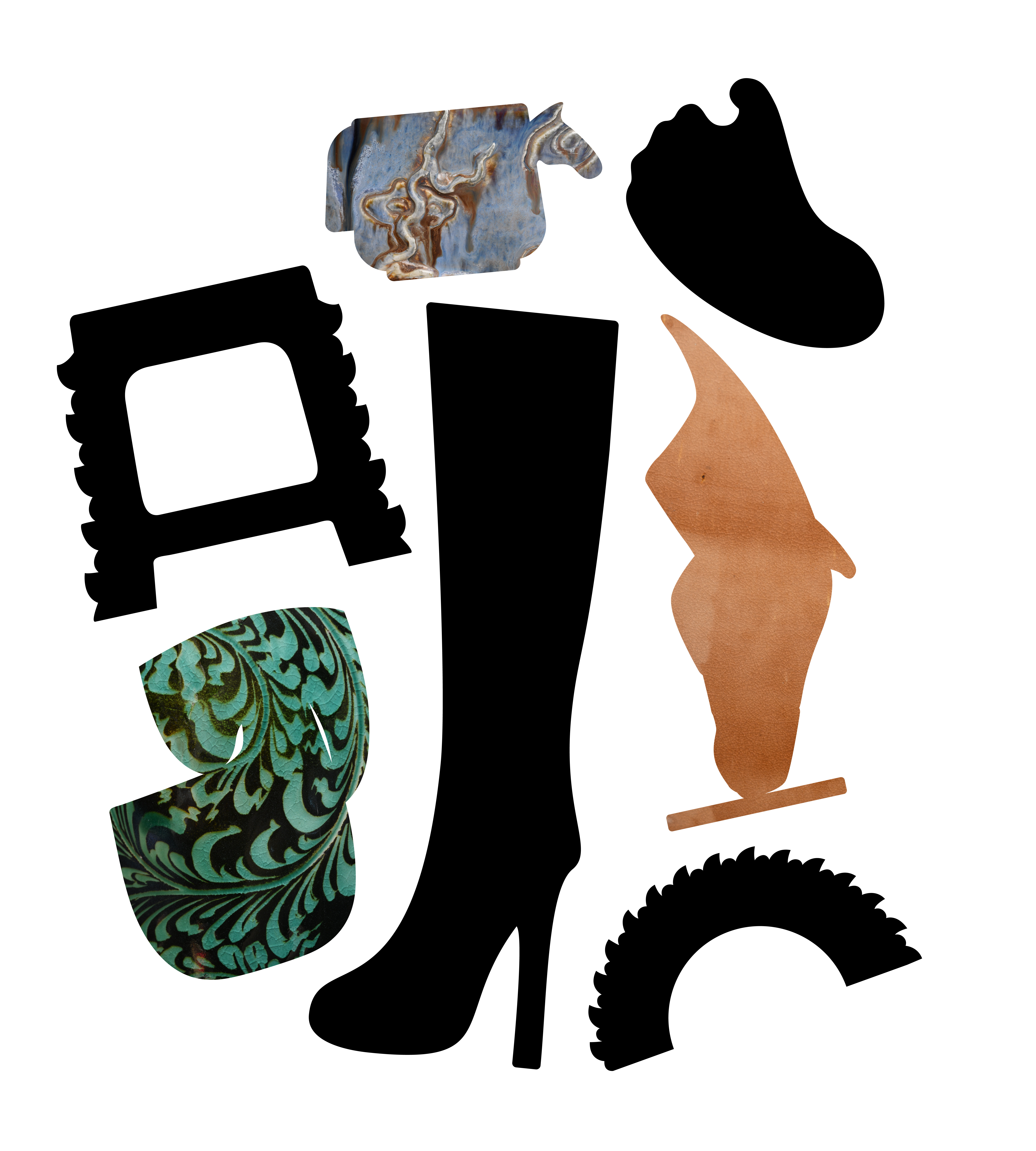
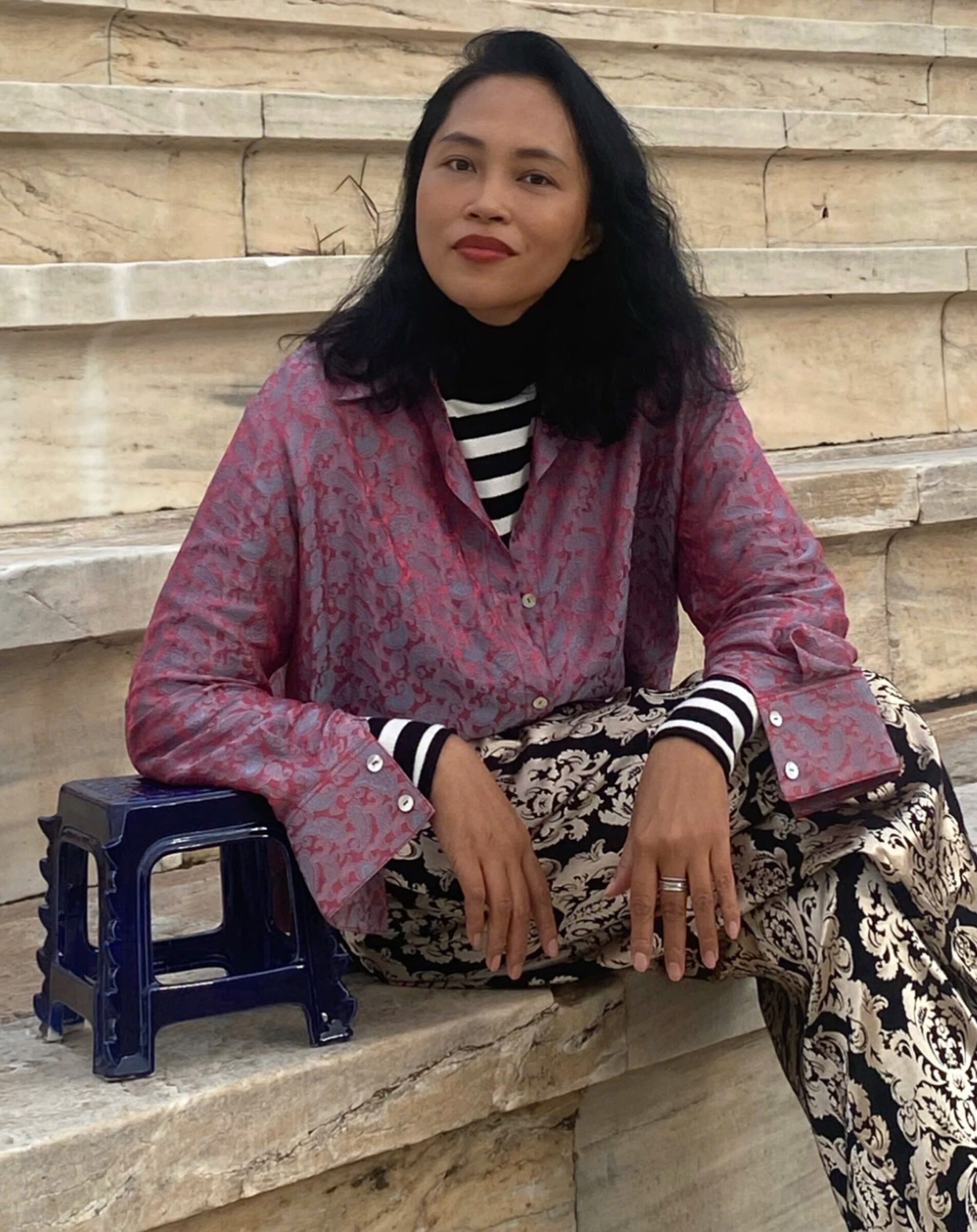
Entering her third decade of practice, Diệu Anh expands from fashion into product design. This move is less a departure than a continuation of her long-standing engagement with local cultural narratives embedded in her earlier work.

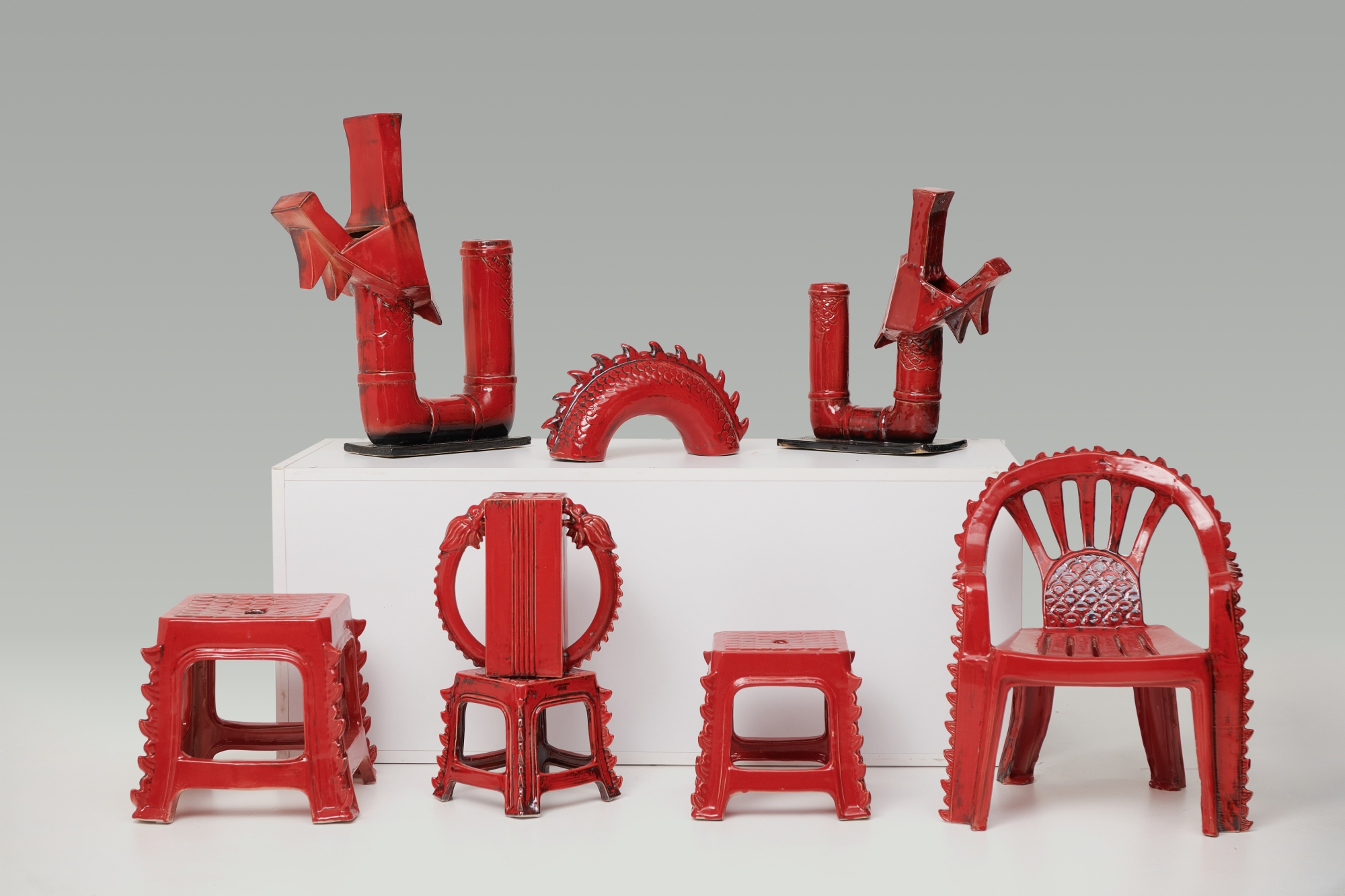
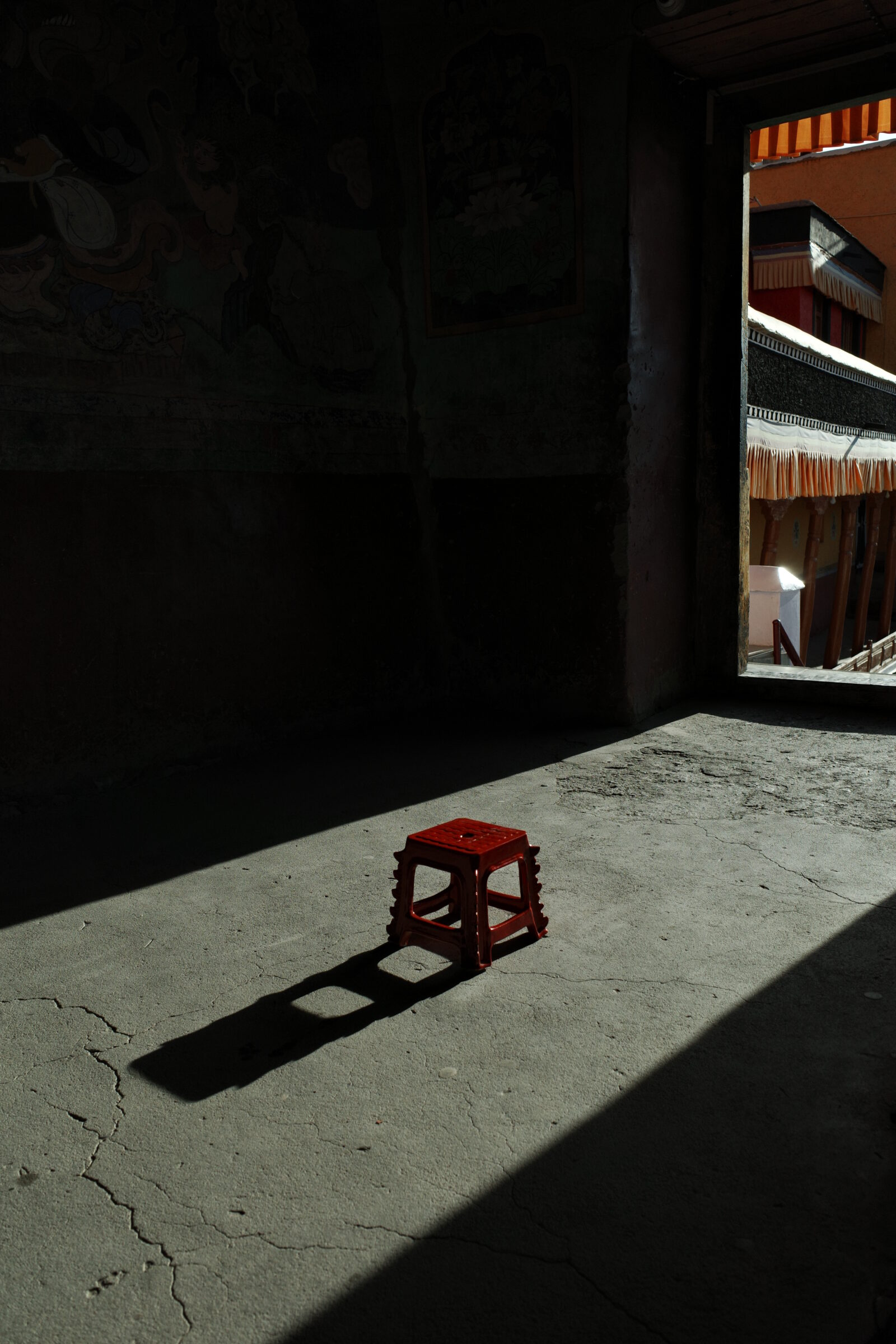
In the Rồng Phố (Dragon of The Urbanites ) collection, the dragon is removed from its symbolic context and placed within everyday urban life. While its sinuous body and elevated head remain, it appears in familiar forms such as pipes, tires, or roadside stools. This shift creates a dialogue between the sacred and the ordinary, situating traditional symbolism within contemporary contexts.
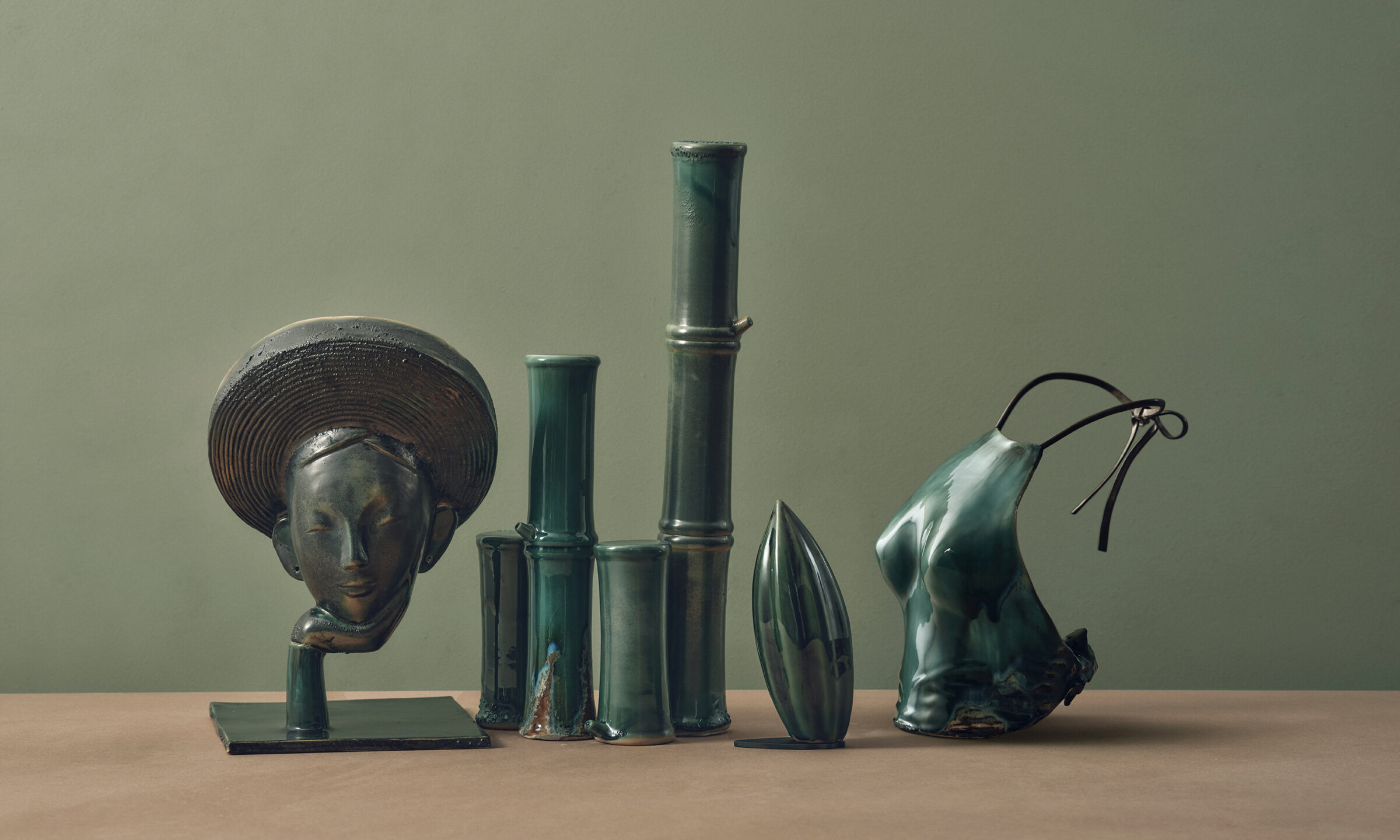
In An Nam, Diệu Anh continues to explore East Asian cultural motifs. If fashion uses fabric to shape form, here form is defined through clay and glaze. In collaboration with BTMA and its signature layered-glaze technique, the works develop nuanced surface tones. Ceramics and fashion converge in a minimal design language, referencing cultural forms such as the ceremonial headdress, yếm bodice, bamboo segments, and rice grains in a contemporary expression.
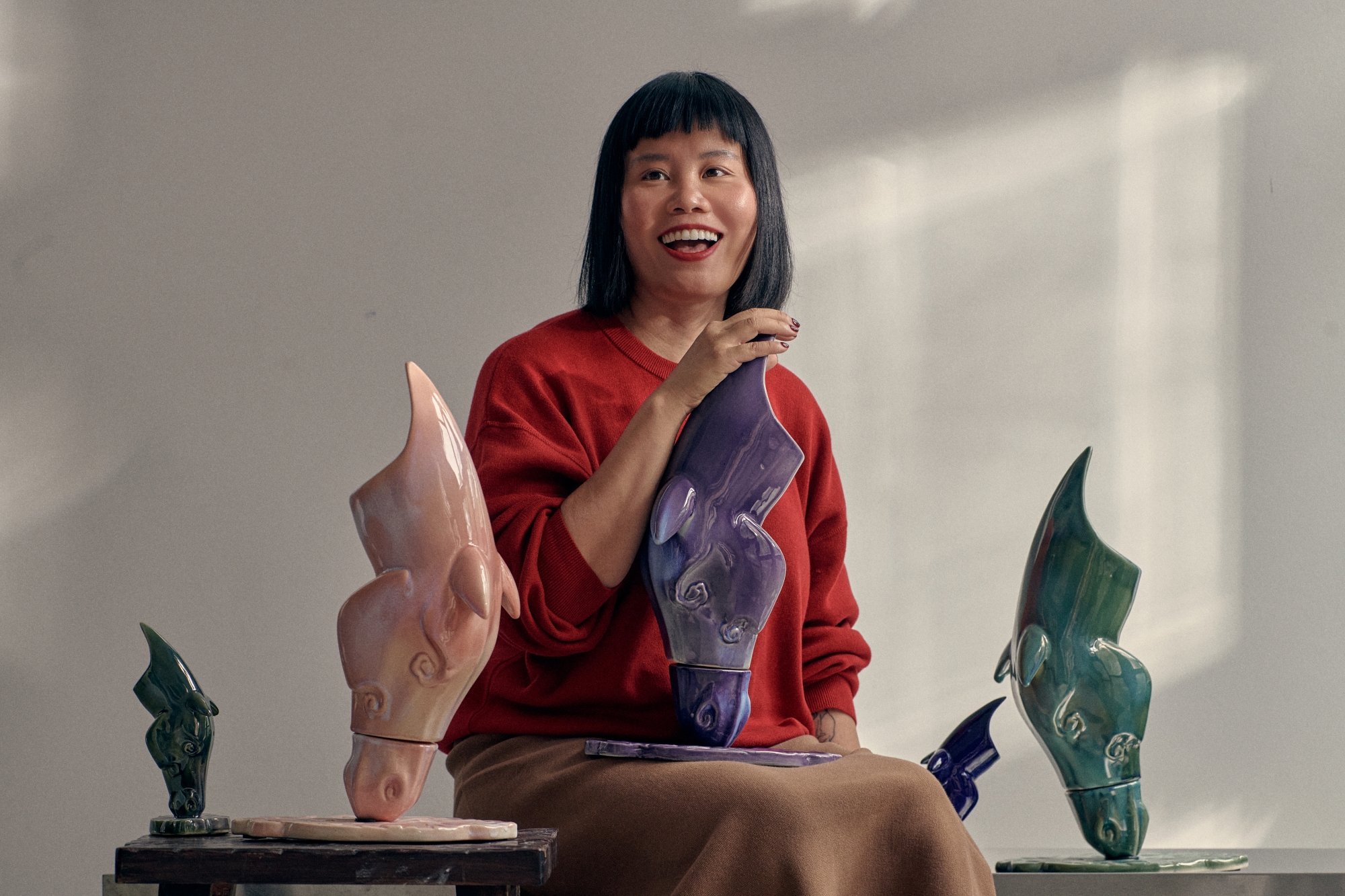
With nearly two decades of experience in visual art and creative design, Phan Linh worked for over nine years as a Window Display Artist for Hermès, while also serving as an Art Director for leading lifestyle magazines in Vietnam. Now based in Norway, she focuses on independent artistic practice, where ceramics becomes a medium for connecting personal memory with cultural experience.
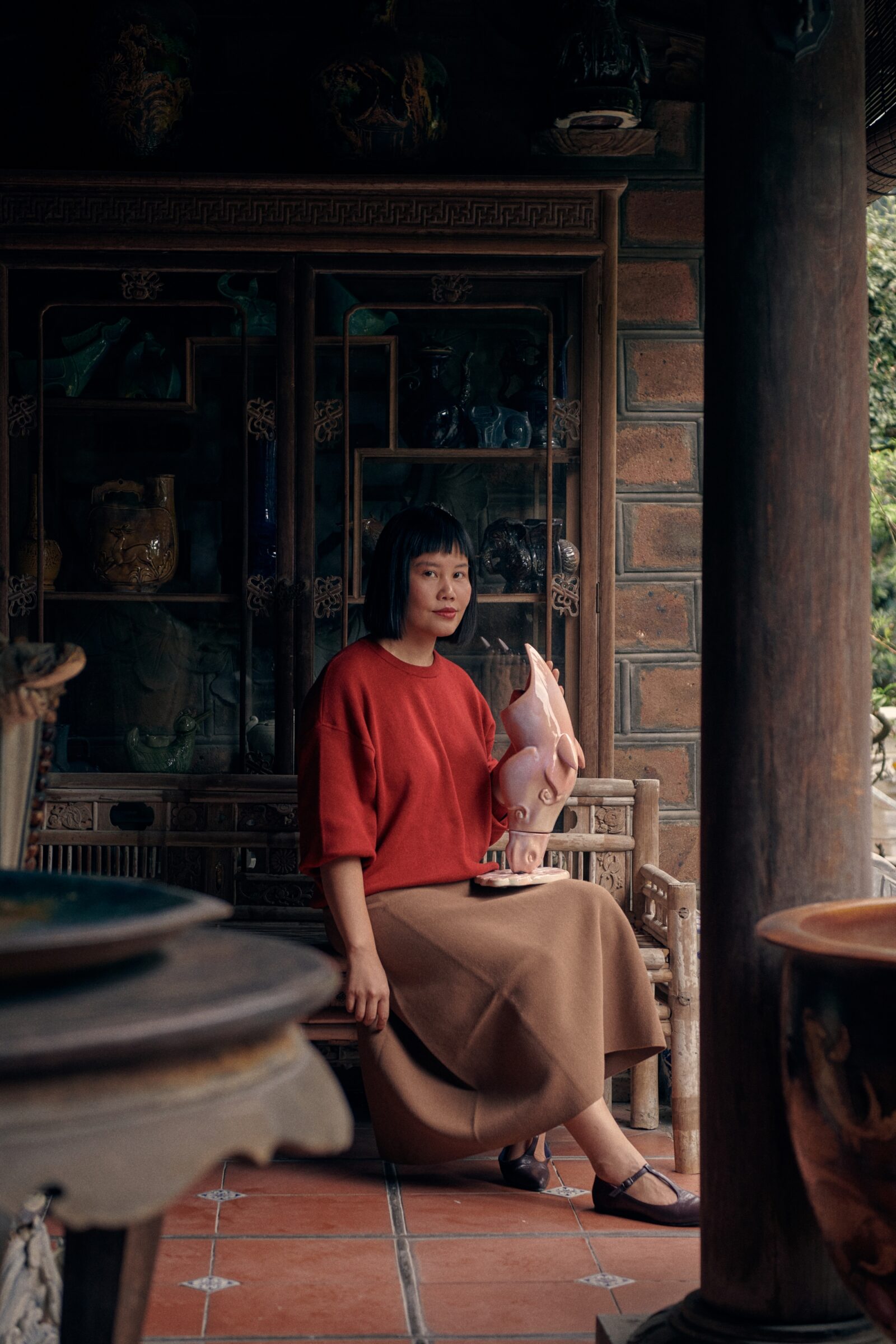

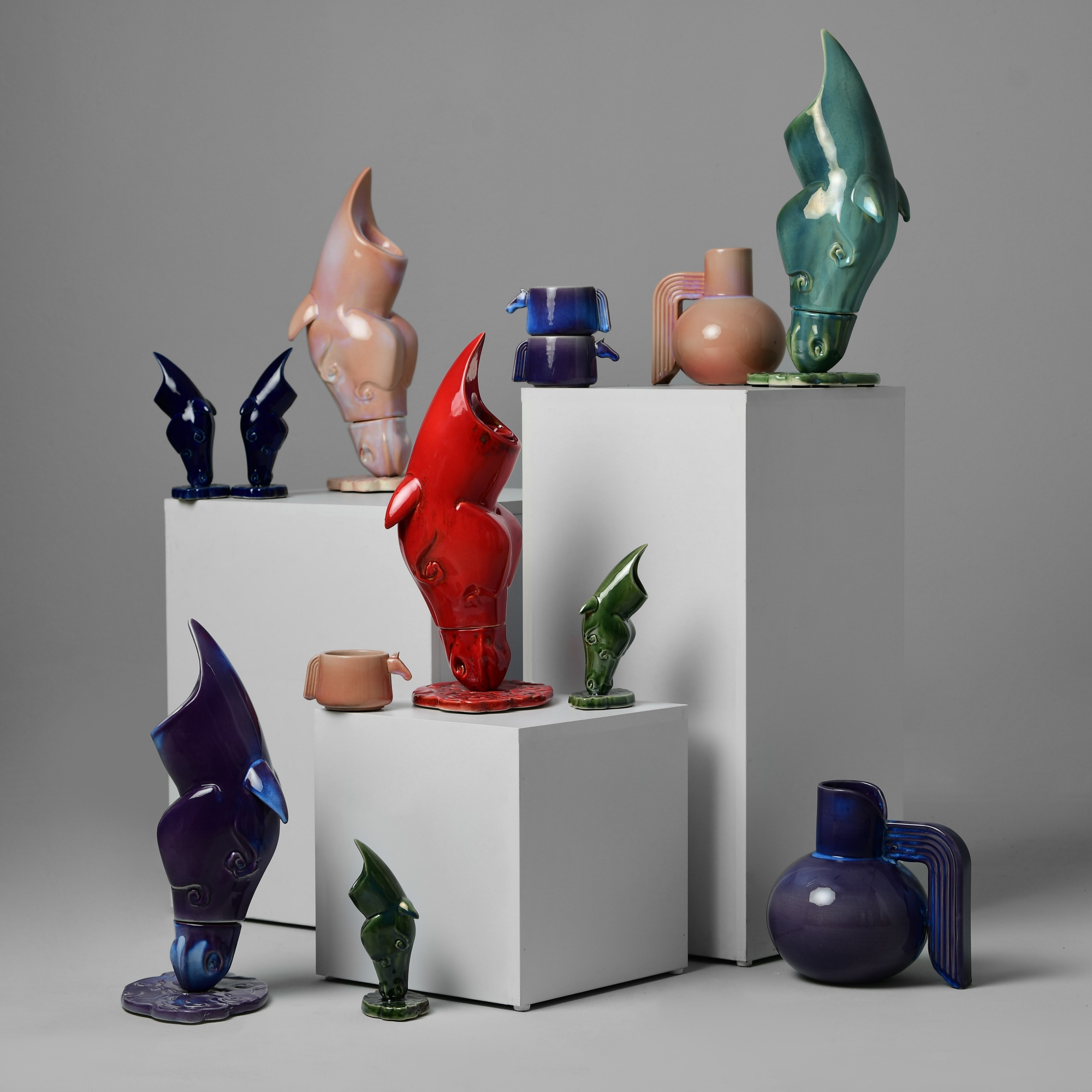
In the Mã Niên 2026 project with BTMA, she reimagines the horse in an unusually quiet state. Rather than a heroic presence, the figure appears in a moment of stillness, drinking by a stream—suggesting a pause within cyclical time. The work draws from seasonal rhythms and the philosophy of repetition explored in the film Spring, Summer, Fall, Winter… and Spring.
Cloud motifs referencing traditional sculpture, combined with water forms inspired by saddle shapes in the stone carvings of Emperor Minh Mạng’s Mausoleum, create layered associations. The image of a horse “drinking the sky” becomes a metaphor for memory and return.
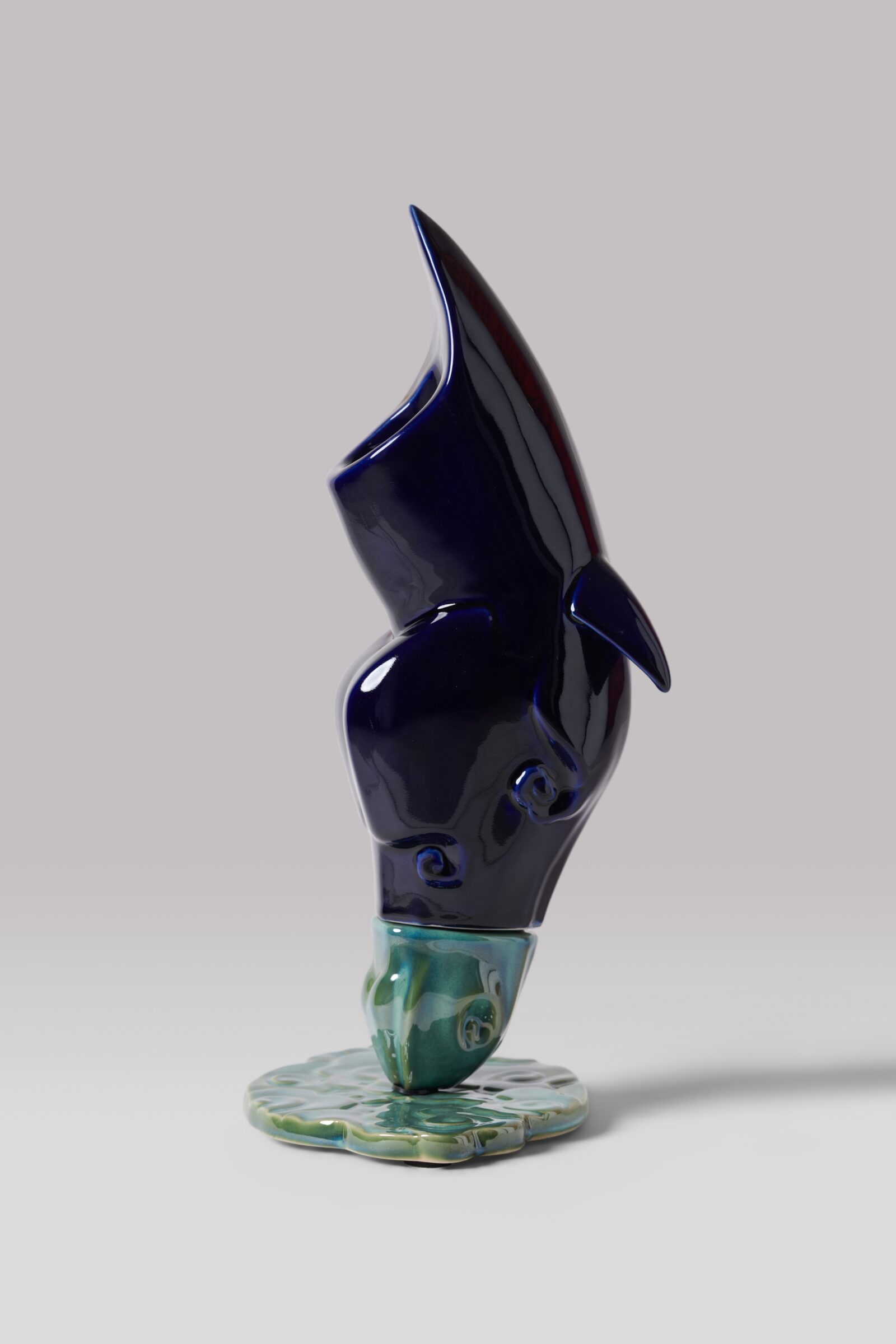
Approaching ceramics as an open structure, the work is constructed in three detachable parts, allowing flexibility across display contexts through variations in assembly and glaze. From this central form, Mã Niên extends into everyday objects—bowls, cups, vases, and lamps—bringing sculptural language into daily life.
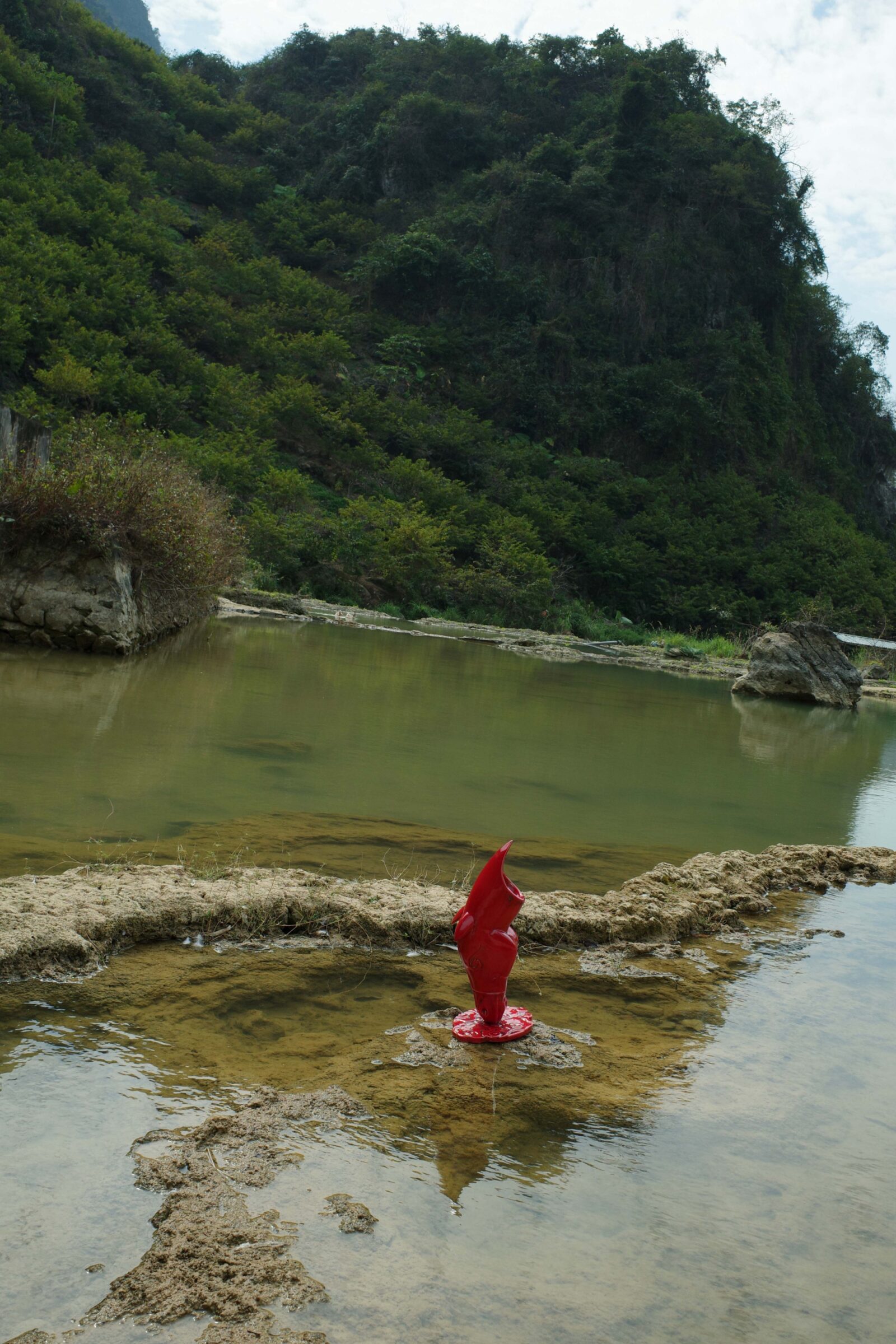
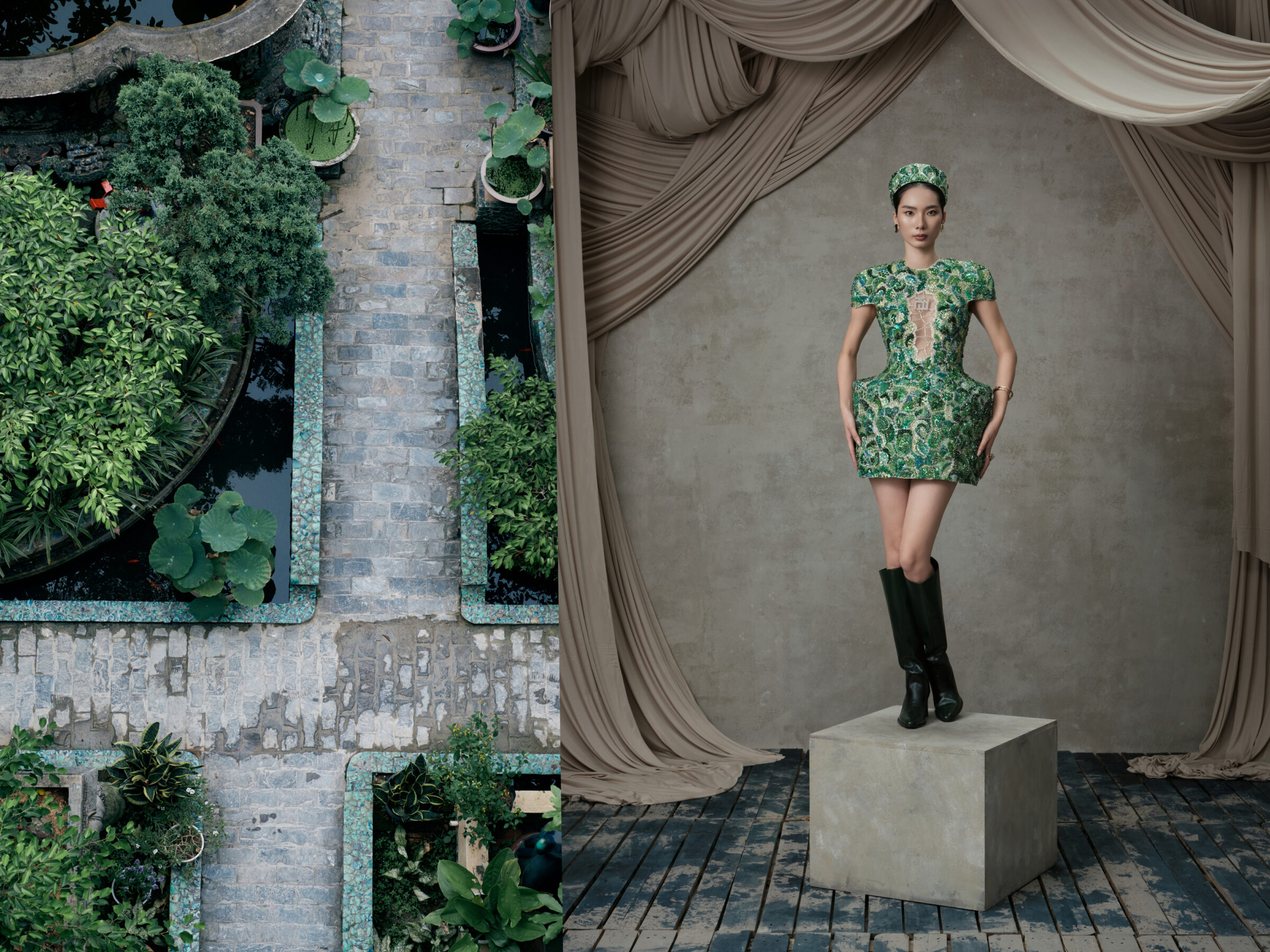
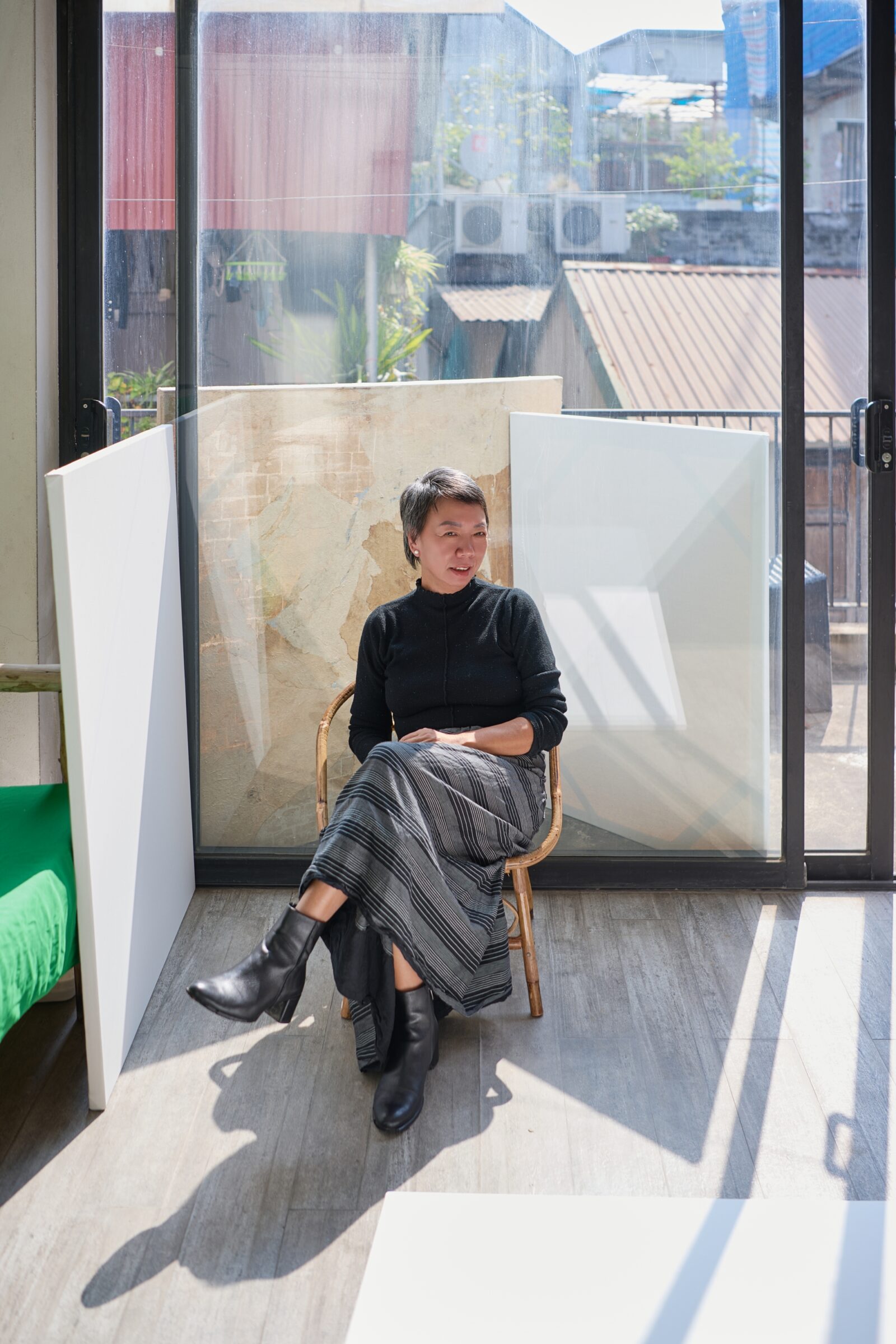
After nearly two decades leading the design brand Module 7, Phạm Kiều Phúc relocated to Hội An in 2018. Time spent living and working in nature became a period of reflection, allowing her practice to be reconsidered from within.
From this experience emerges the concept of “Tàng Ẩn” (Inside the Unknown). Here, heritage is not confined to objects or archives, but understood as a latent cultural memory within the individual, waiting to be activated through creative practice.

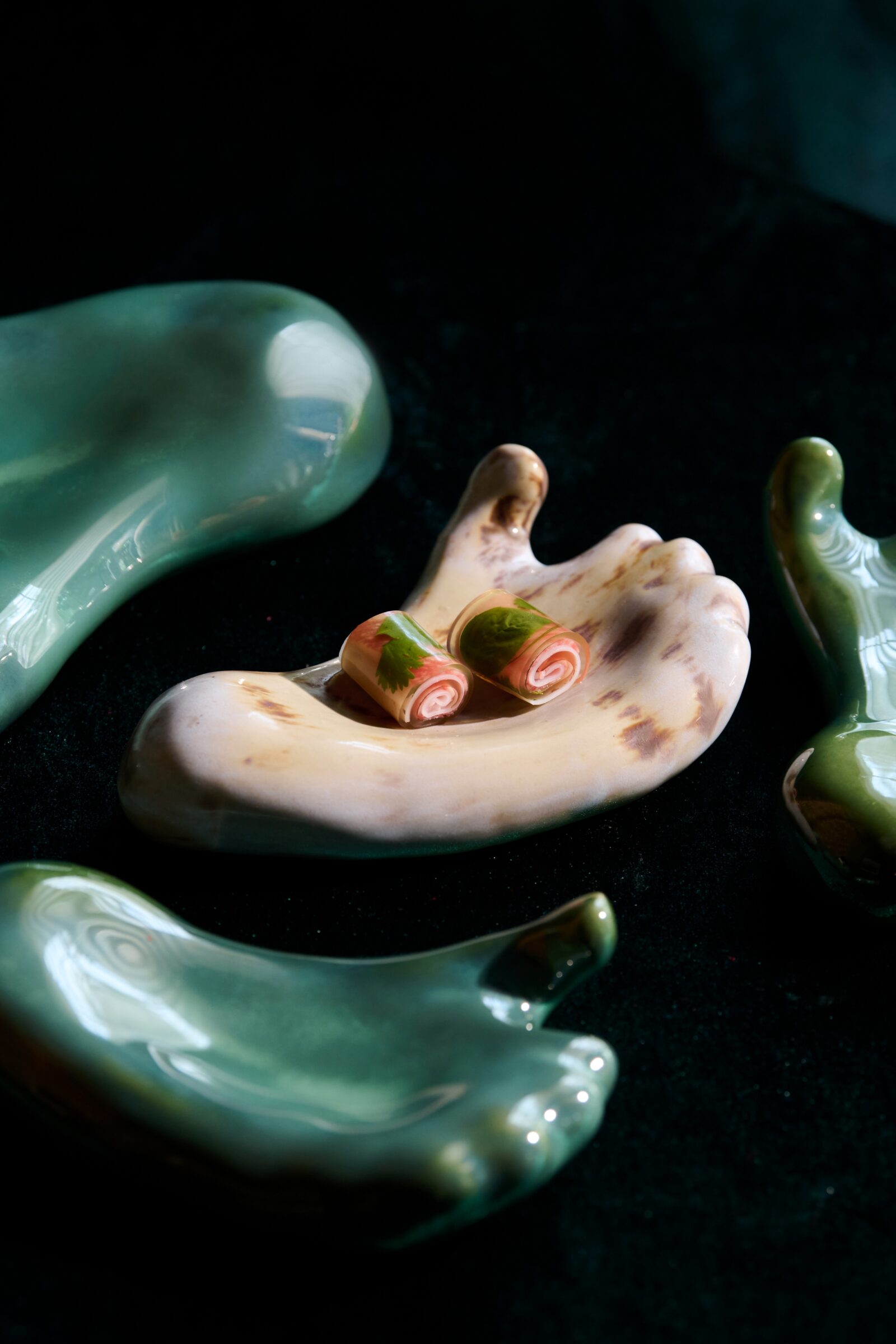
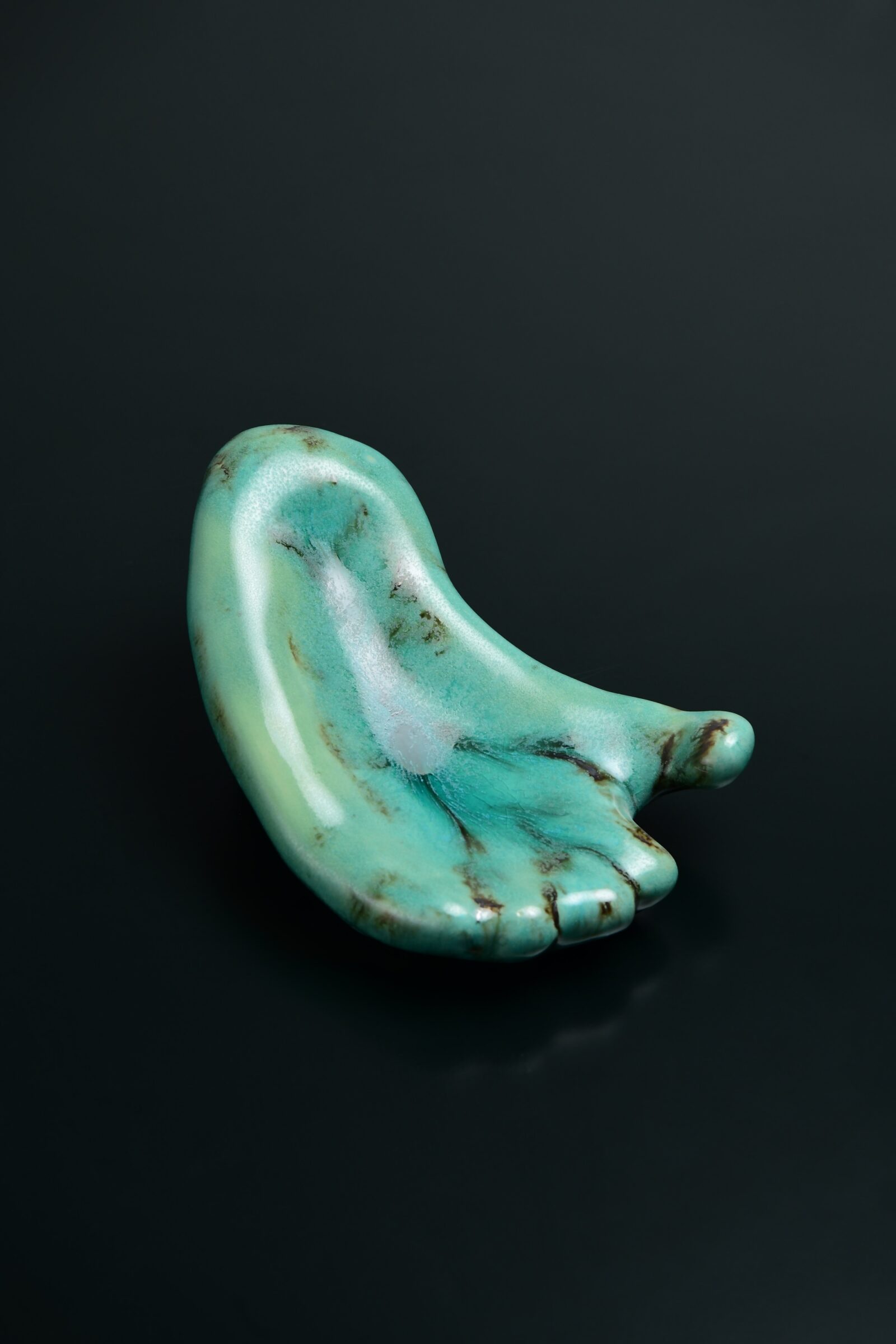
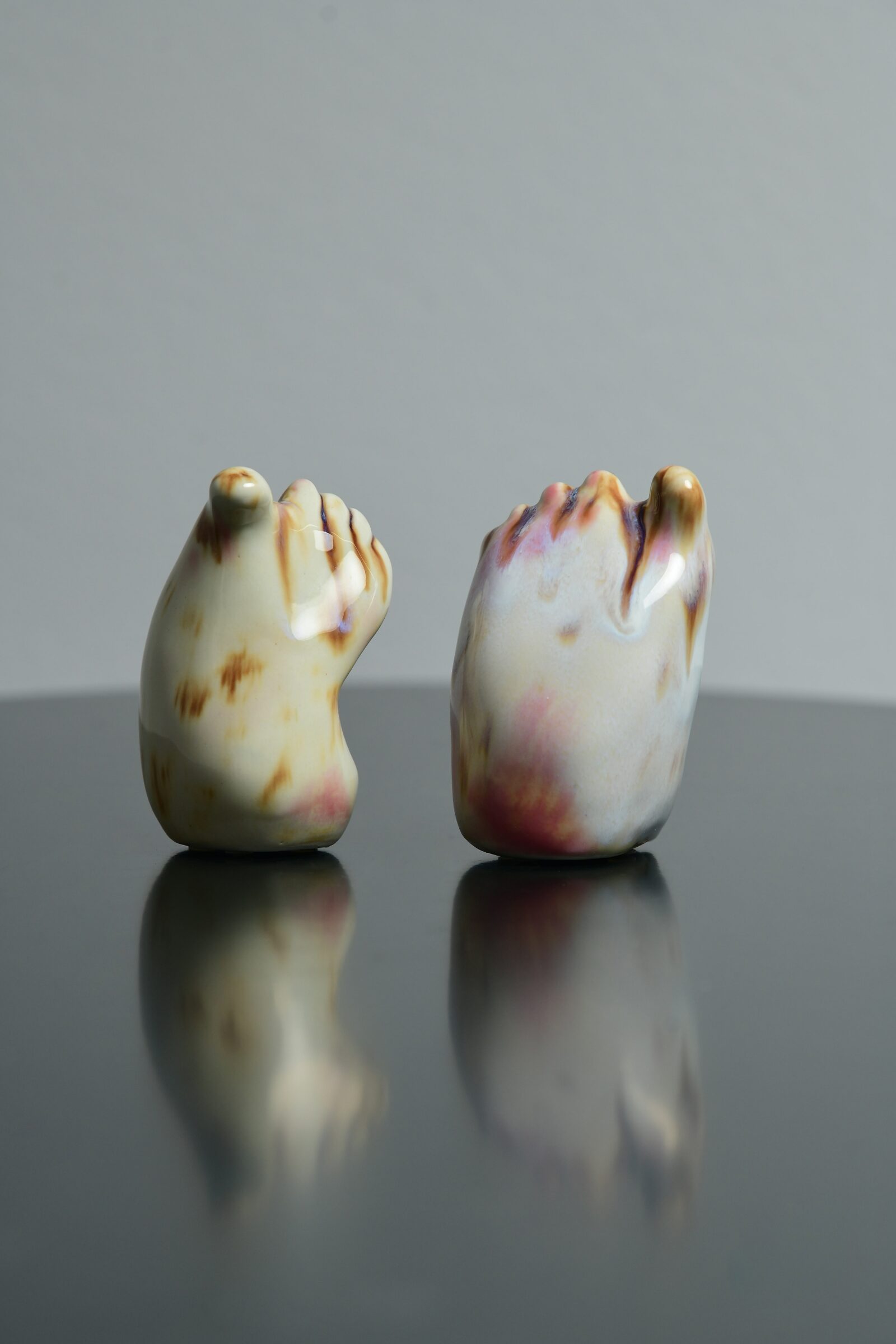
Her collaboration with BTMA materializes in the Giao Chỉ collection, rooted in childhood memories of stories told by her father. Rather than reconstructing myth as historical fact, she approaches it as a primordial image within the subconscious. The Giao Chỉ foot becomes a symbolic marker rather than a literal representation.
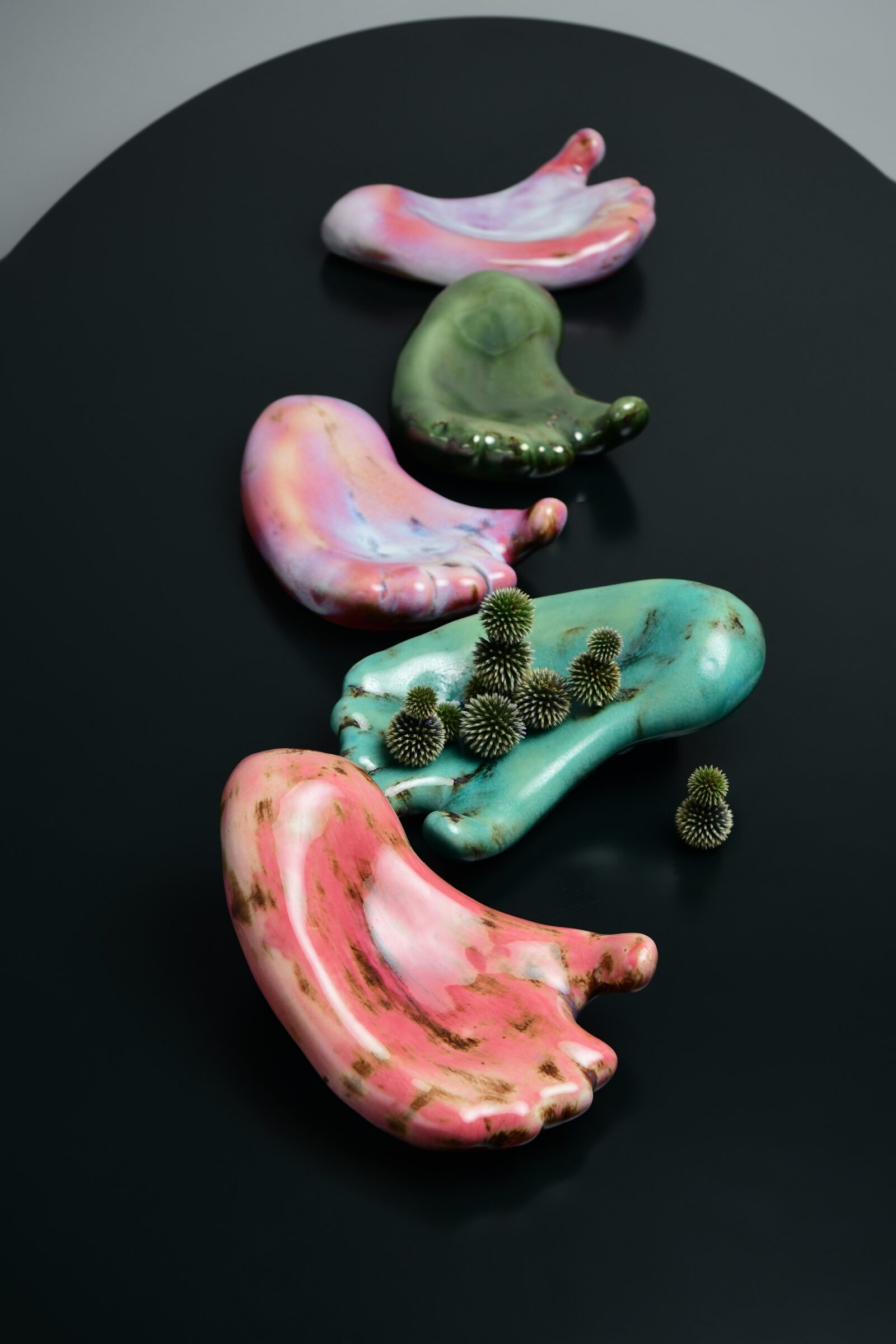
A restrained sculptural language informed by Art Primitive—characterized by simplified, geometric forms recalling prehistoric and folk aesthetics—combined with BTMA’s layered-glaze technique, produces objects that are at once archaic and contemporary.
Moving from observation to direct engagement, Phạm Kiều Phúc works with clay and fire as primary media. Through this process, cultural memory and personal experience gradually take form as tangible ceramic objects.
Four distinct practices, yet a shared point of convergence: Bát Tràng ceramics as a site for dialogue with heritage. While Diệu Anh engages continuity within local cultural flows, Nguyễn Hà embeds architectural thinking into minimal forms, Phan Linh translates memory through imagery and surface, and Phạm Kiều Phúc reveals latent cultural layers through material engagement.
This feature does not merely document individual practices, but reflects a broader approach to heritage through a female perspective. Here, heritage is no longer a fixed relic of the past, but a living material—continuously reinterpreted and embedded within contemporary life. Through their work, Bát Tràng ceramics moves beyond display, taking on new roles within design and everyday experience.