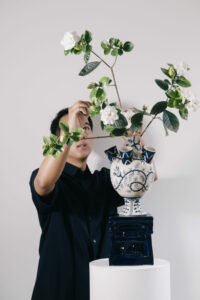
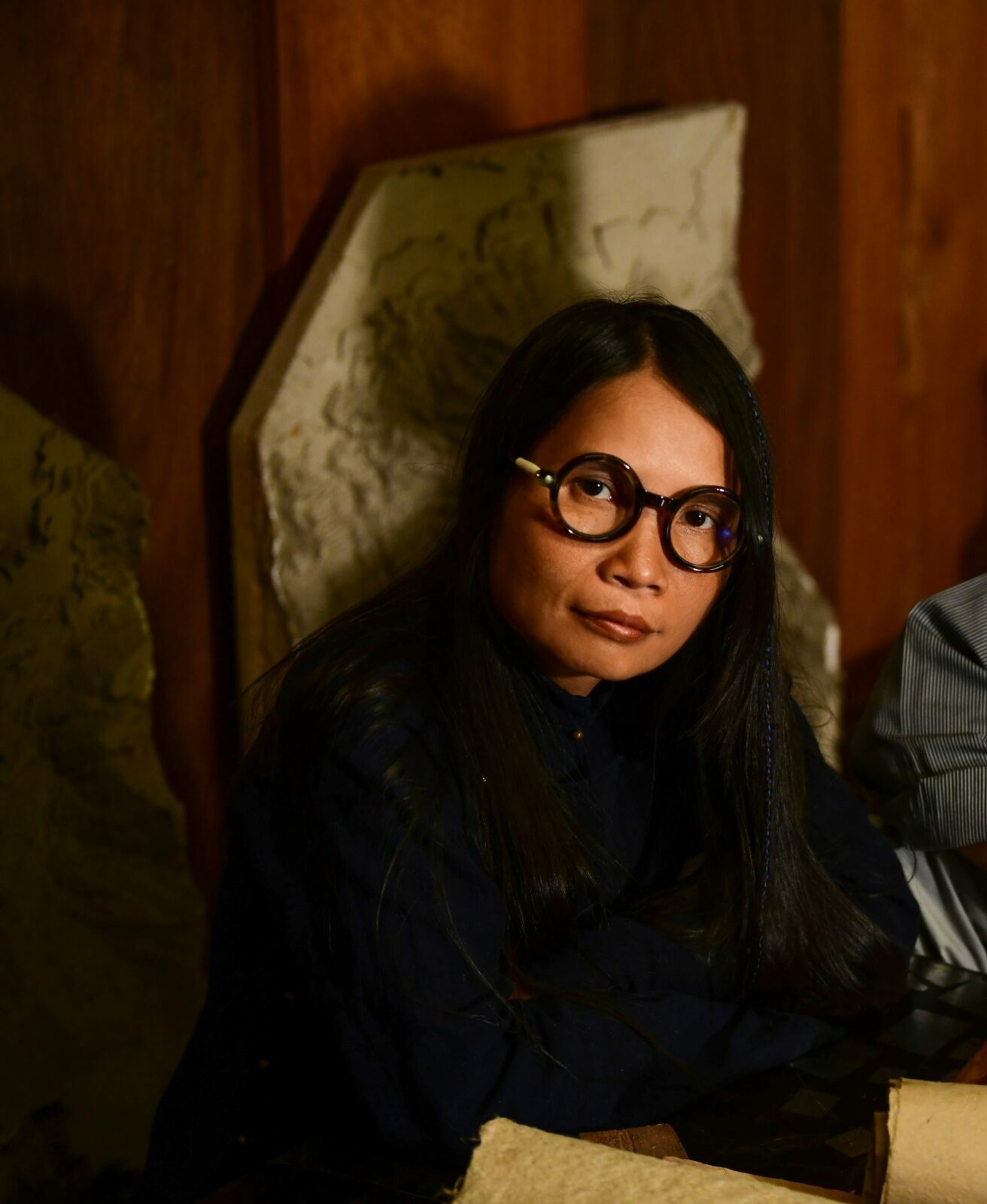
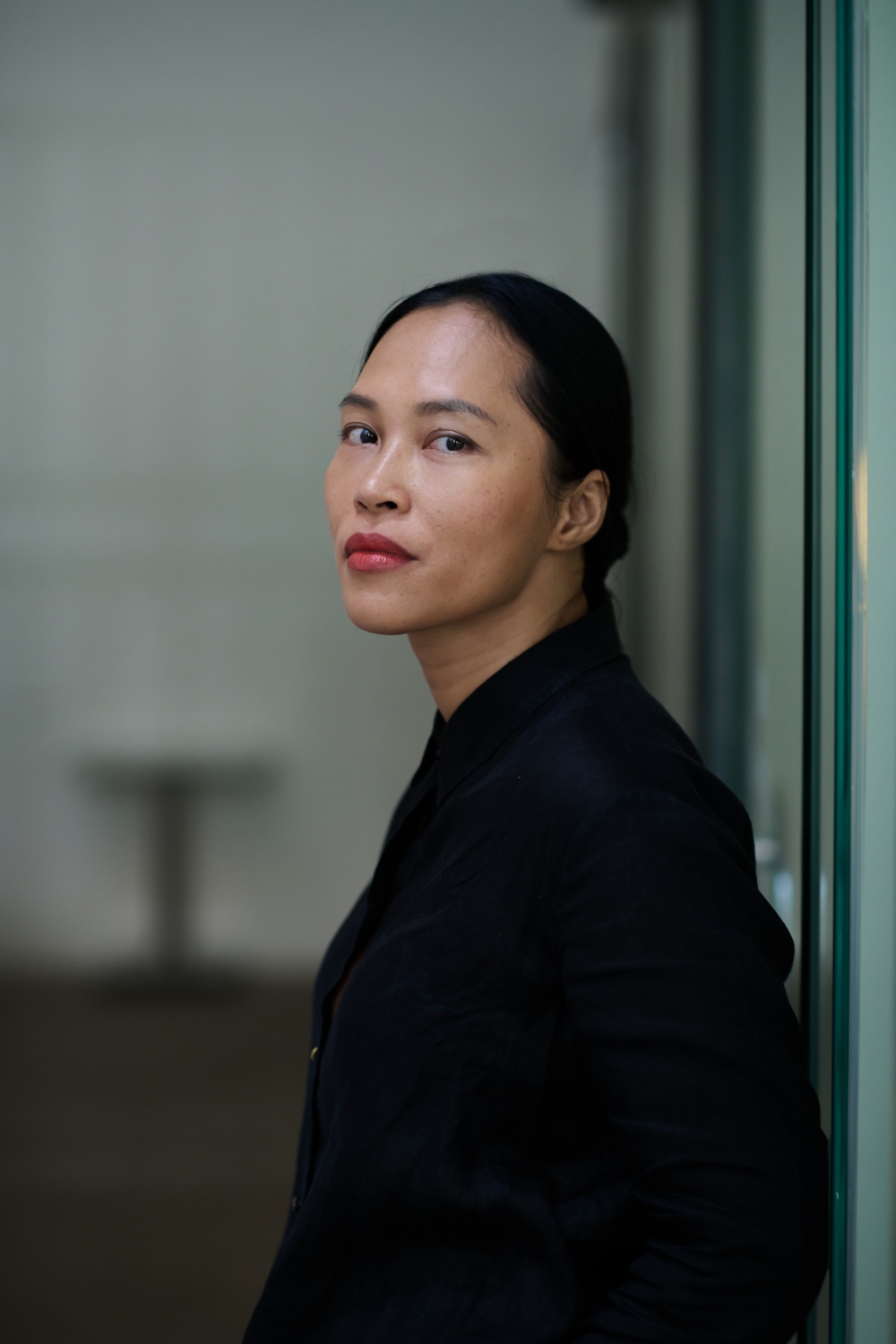
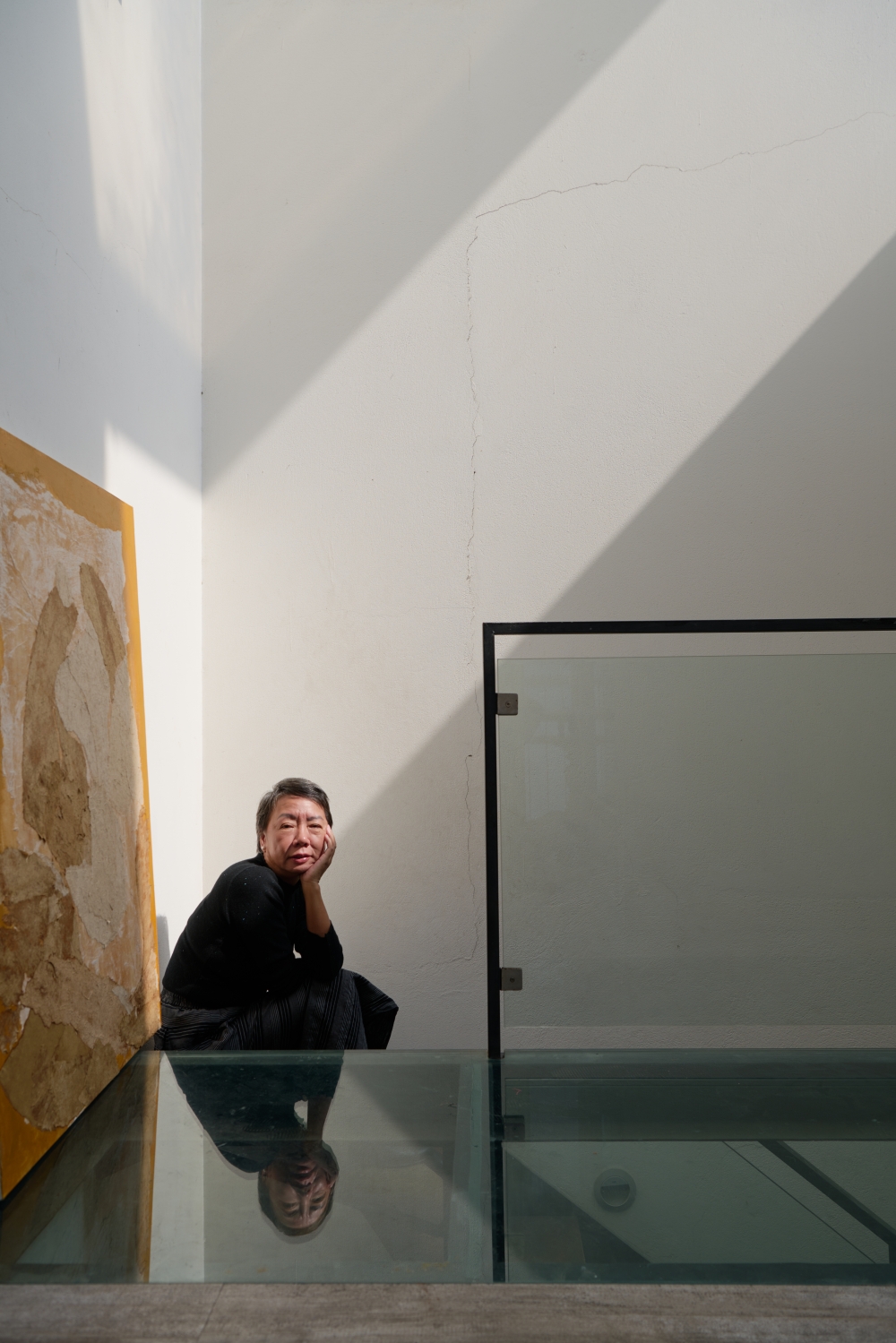
Behind the floral installations seen at exhibitions and events, florist Vỹ Nguyễn still keeps a quiet connection to the flowers and greenery growing inside the Memory Garden at Bát Tràng Museum — a place where he finds joy in life’s simplest gestures.
Our conversation with Vỹ began from this very contrast. Within the contemplative setting of the museum, he sets aside complexity to engage in a dialogue with handcrafted ceramics and the greenery of the garden.
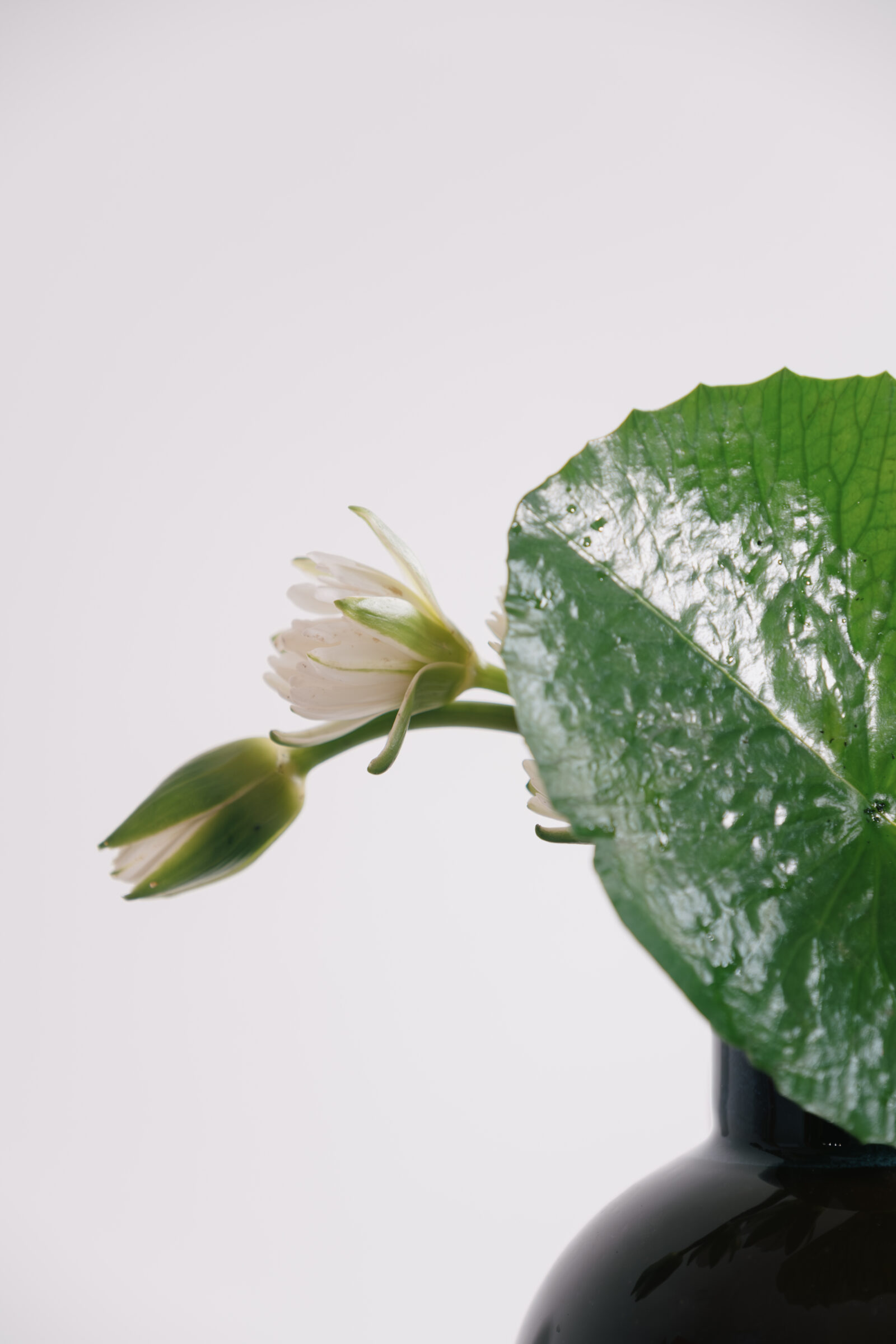
Through his reflections, one begins to understand how a professional florist continues to nurture inspiration from familiar materials, and how ordinary flowers gathered from the museum garden can still create a subtle visual language filled with depth and sensitivity.
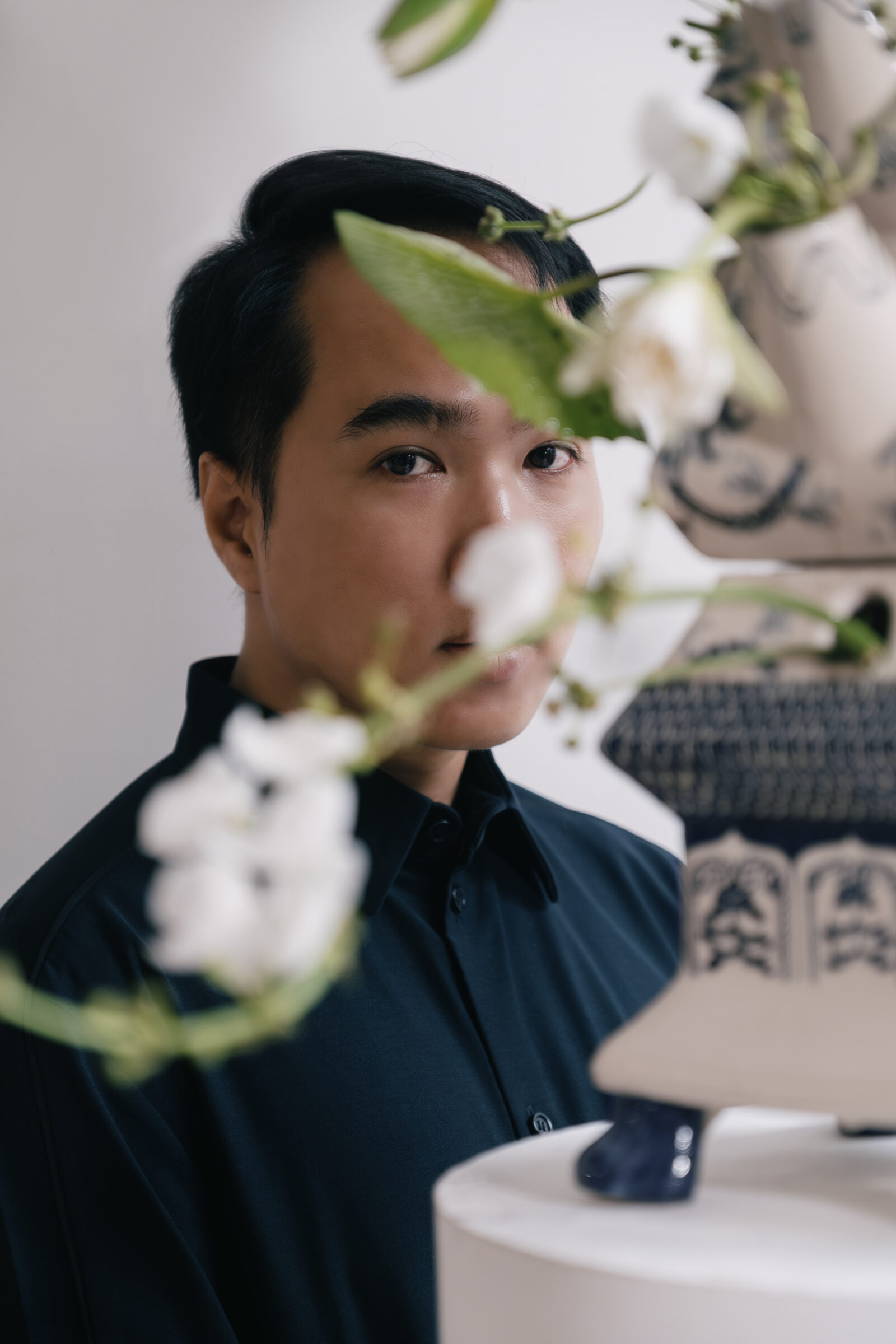

In art, many people pursue a personal philosophy to define their practice. As a florist who often works in highly demanding environments, where does your philosophy of floral arrangement come from?
I simply want to embrace what already exists in nature. I observe the way plants grow, then bring that feeling into my floral work, because nature already allows trees and flowers to grow with such grace. Old branches carry their own beauty naturally. Their shapes are beautiful in ways we could never deliberately arrange ourselves. When I work with flowers, I focus entirely on placing those natural forms into harmony with the vase and the surrounding space. In that process, my mind also becomes calmer and quieter.
If you could create a garden entirely of your own, which flowers would you choose?
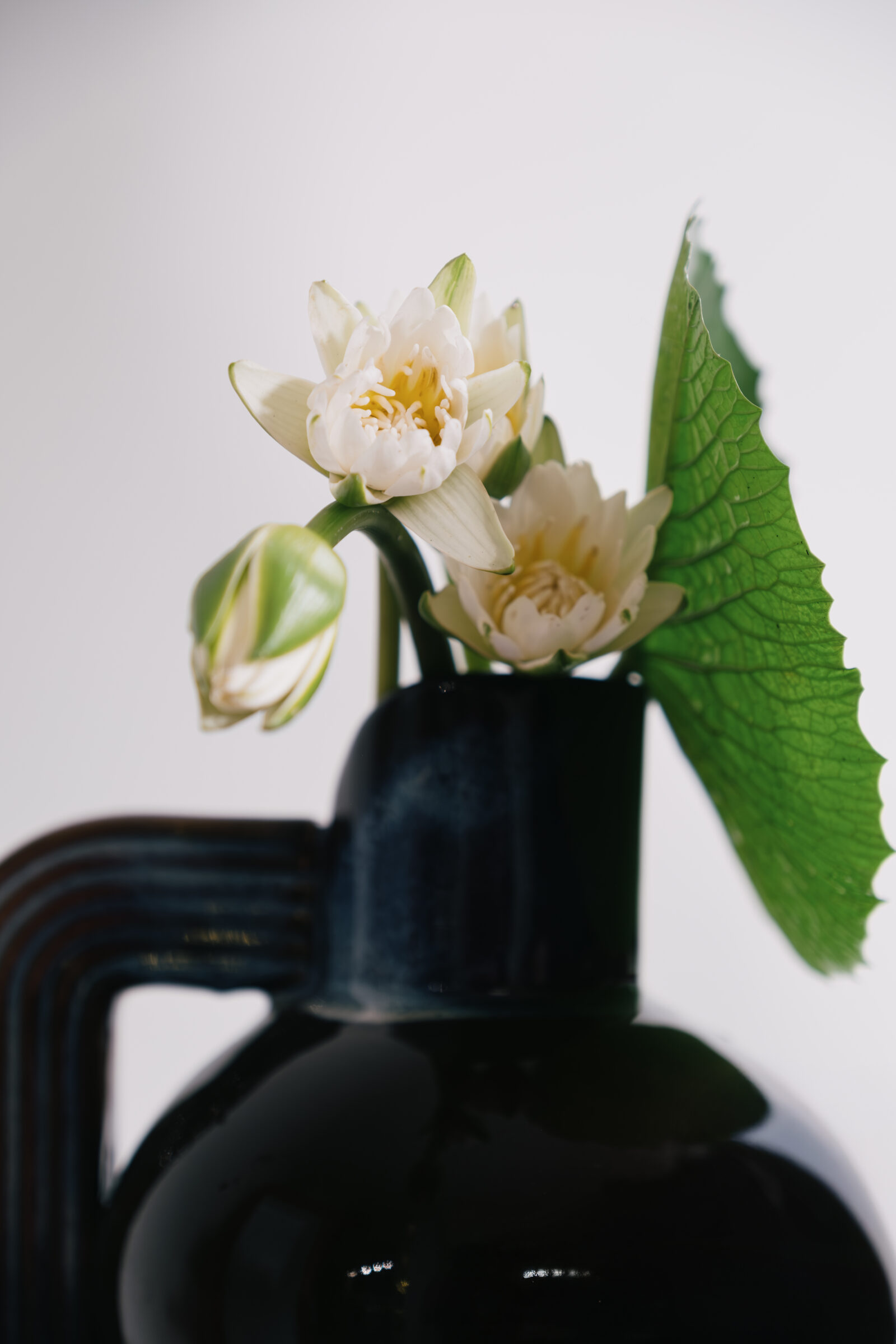
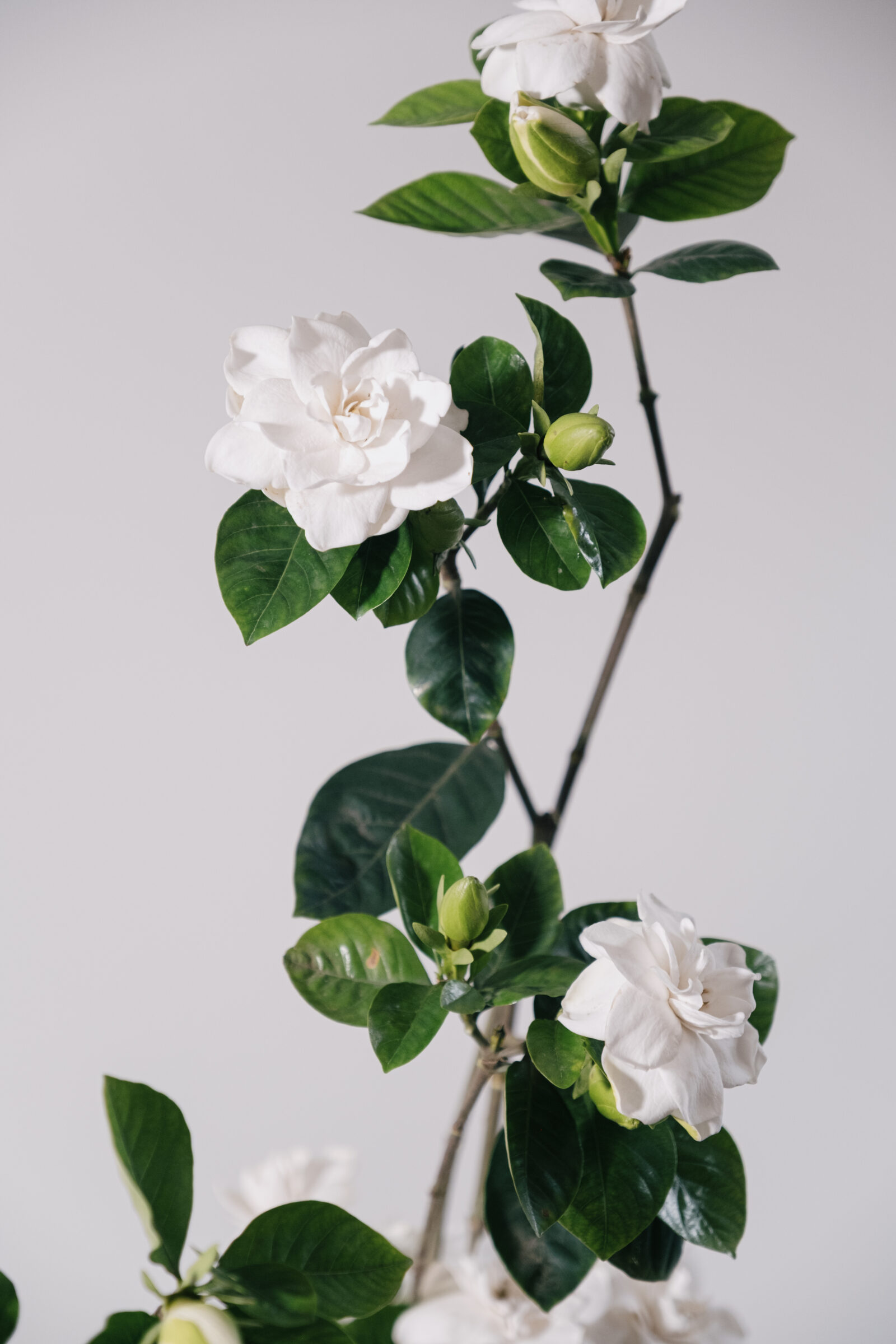
I’m often drawn to simple white flowers such as white ginger lilies and water lilies. Wherever they are placed, there is always a sense of purity that settles quietly into the living space.
Working with beauty every day can sometimes lead to losing inspiration. Have you ever felt tired of flowers, and how do you restore yourself creatively?
For me, arranging flowers is a way of expressing emotions, finding stillness, and healing. So I don’t think I could ever grow tired of flowers. If anything, I feel more tenderness toward them as time passes. People often say, “Flowers are made to be picked,” but I simply hope every flower can be cherished throughout its short yet meaningful life. Whether in moments of joy or sadness, artists always find different feelings to place into their work.
Beyond flowers, you also work with photography, spatial styling, and art collecting. How do these interests shape your perspective as a florist?
Observing spaces teaches me how to control rhythm — where flowers should be placed and how they can best relate to the vase and the surrounding environment. Photography helps me recognize the most beautiful angles and capture the fleeting moment of a flower at its peak. All of these disciplines support one another. Those experiences allow me to work more intuitively and become more sensitive in both observation and practice.
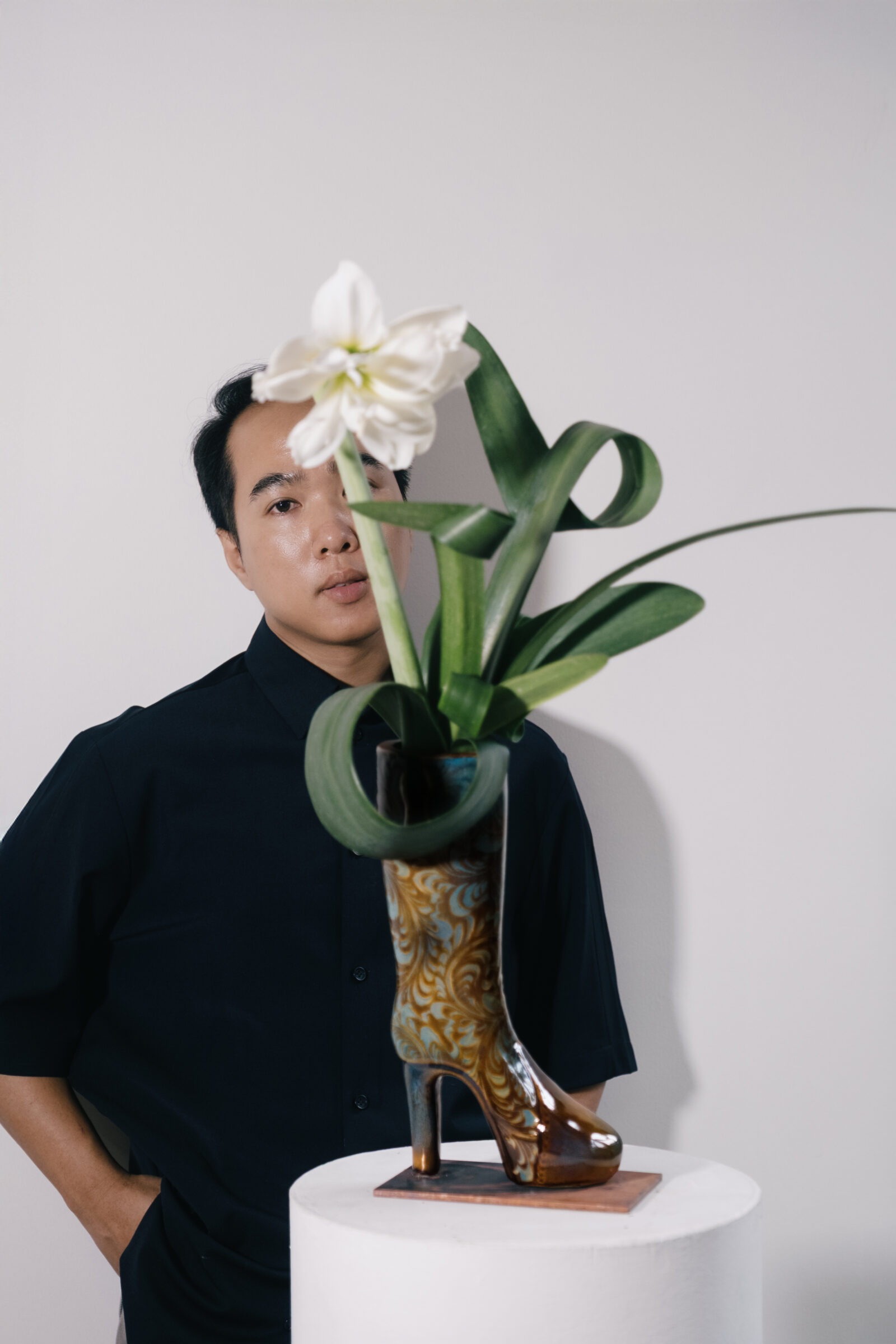
How did you feel experiencing the connection between nature and ceramic heritage within the “Memory Garden” at Bát Tràng Museum?
When I arrived here, I was deeply moved by the garden itself, which was created more than twenty years ago by the late People’s Artisan Vũ Đức Thắng. I found myself admiring every detail — from the aged pine trees and bonsai to the white lilies and ginger flowers planted along mosaic pathways made from broken ceramic fragments, or the blooming white water lilies surrounded by lush green leaves. The dialogue between flowers from the museum garden and the ceramic vessels of Bát Tràng Museum Atelier began from that emotional response.
People often say flowers and ceramics naturally belong together. What role does ceramics play in your creative process, and what kinds of vessels are you drawn to?
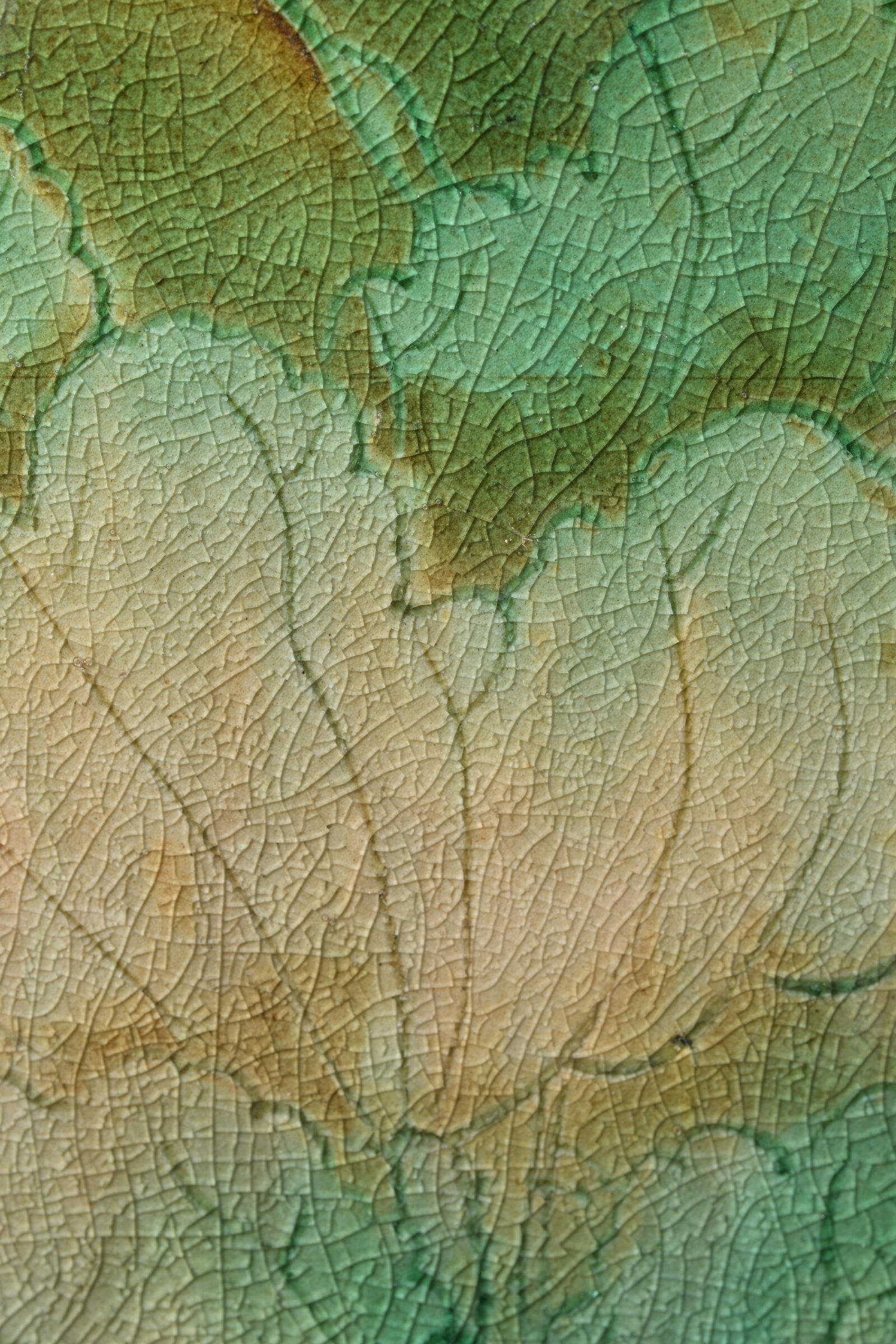
Flowers and ceramics already share a very natural connection. Ceramics become a quiet and steady support that allows flowers to bloom and release their fragrance. When the flowers disappear, the ceramic vessel remains — like a silent witness to the passing of time. To me, ceramics are gifts born from the earth, carrying the spirit of local culture through forms that feel both gentle and resilient. Because I’m drawn to what is natural, every vessel feels like it carries its own story and breath. Each one offers a different source of inspiration.
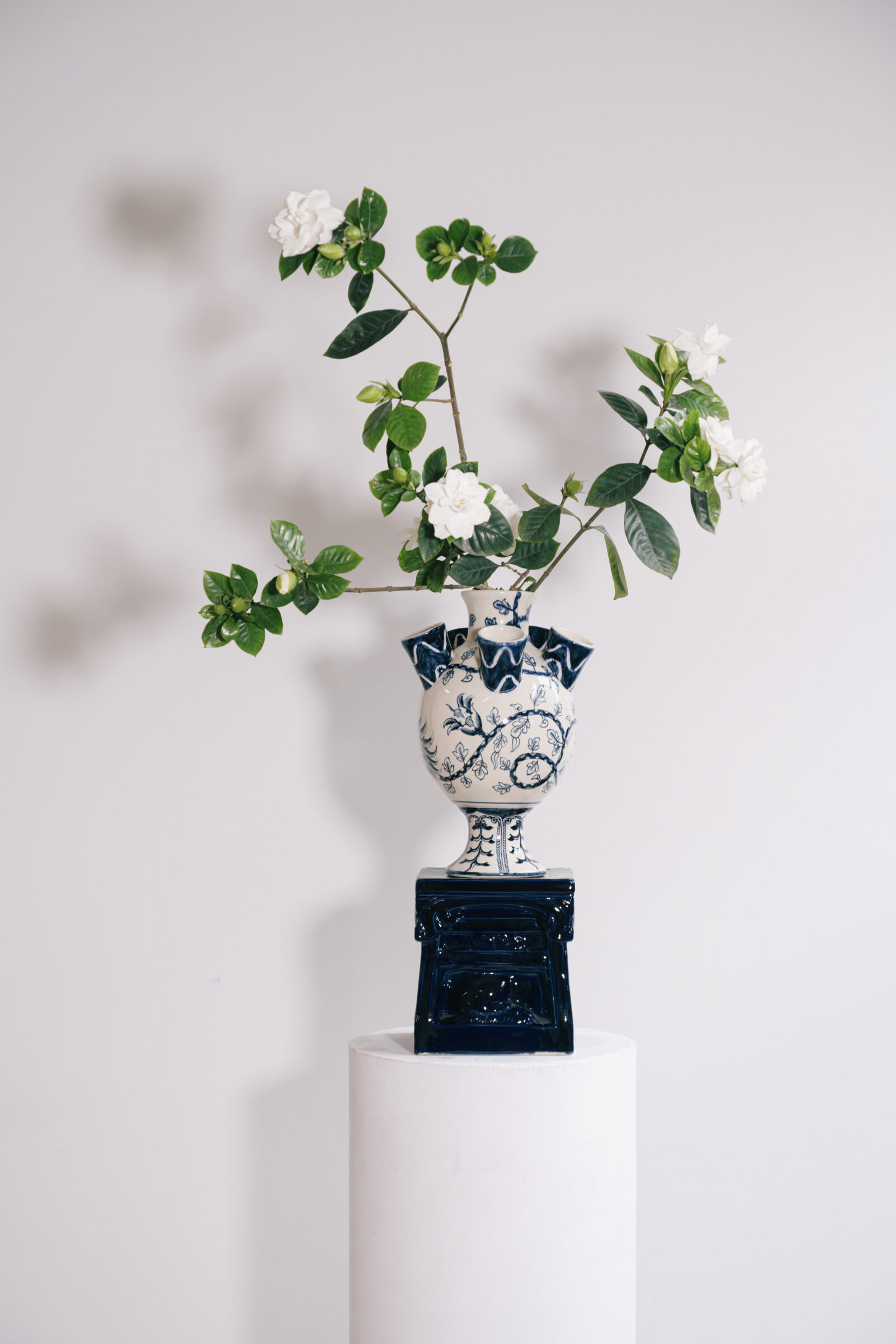
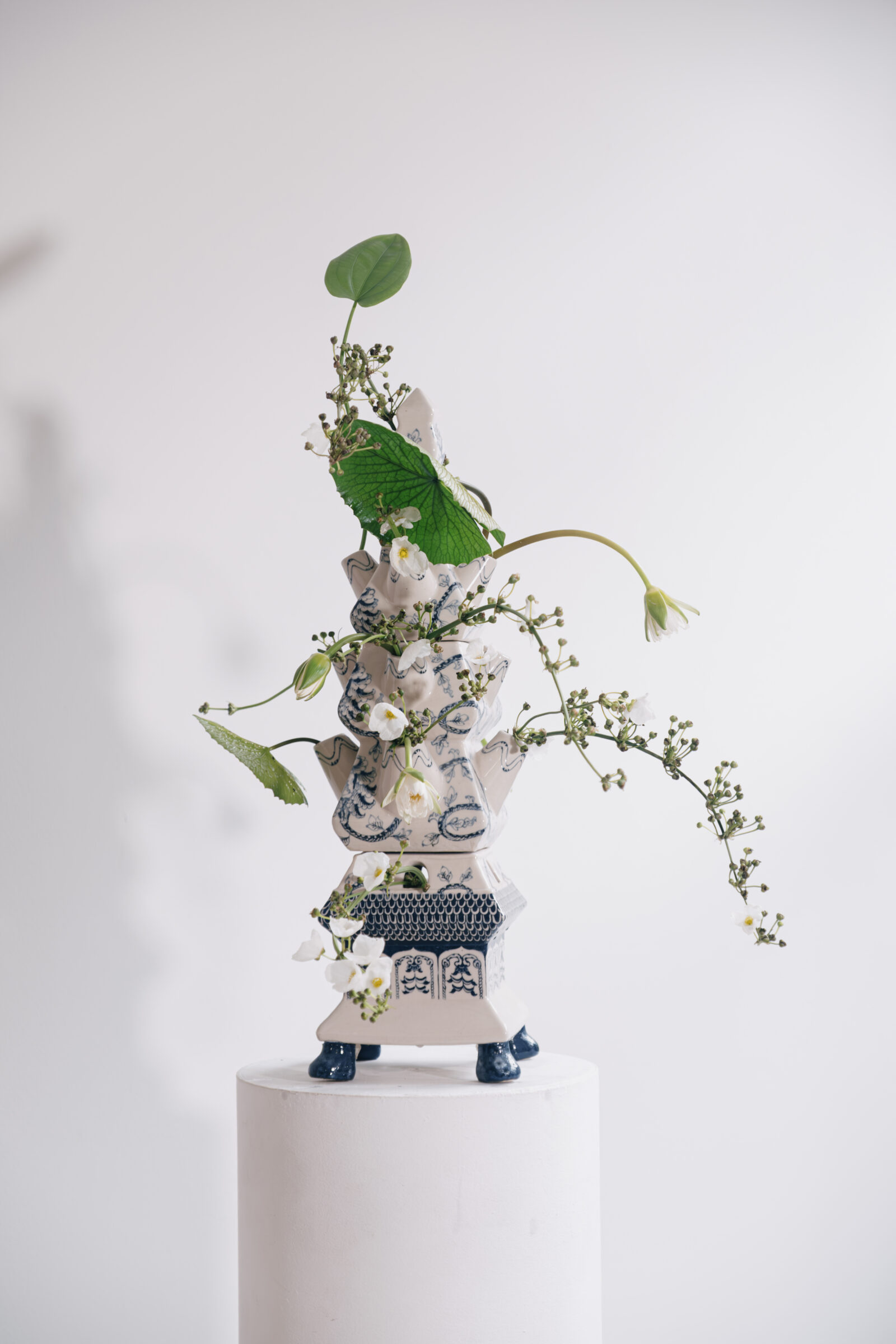
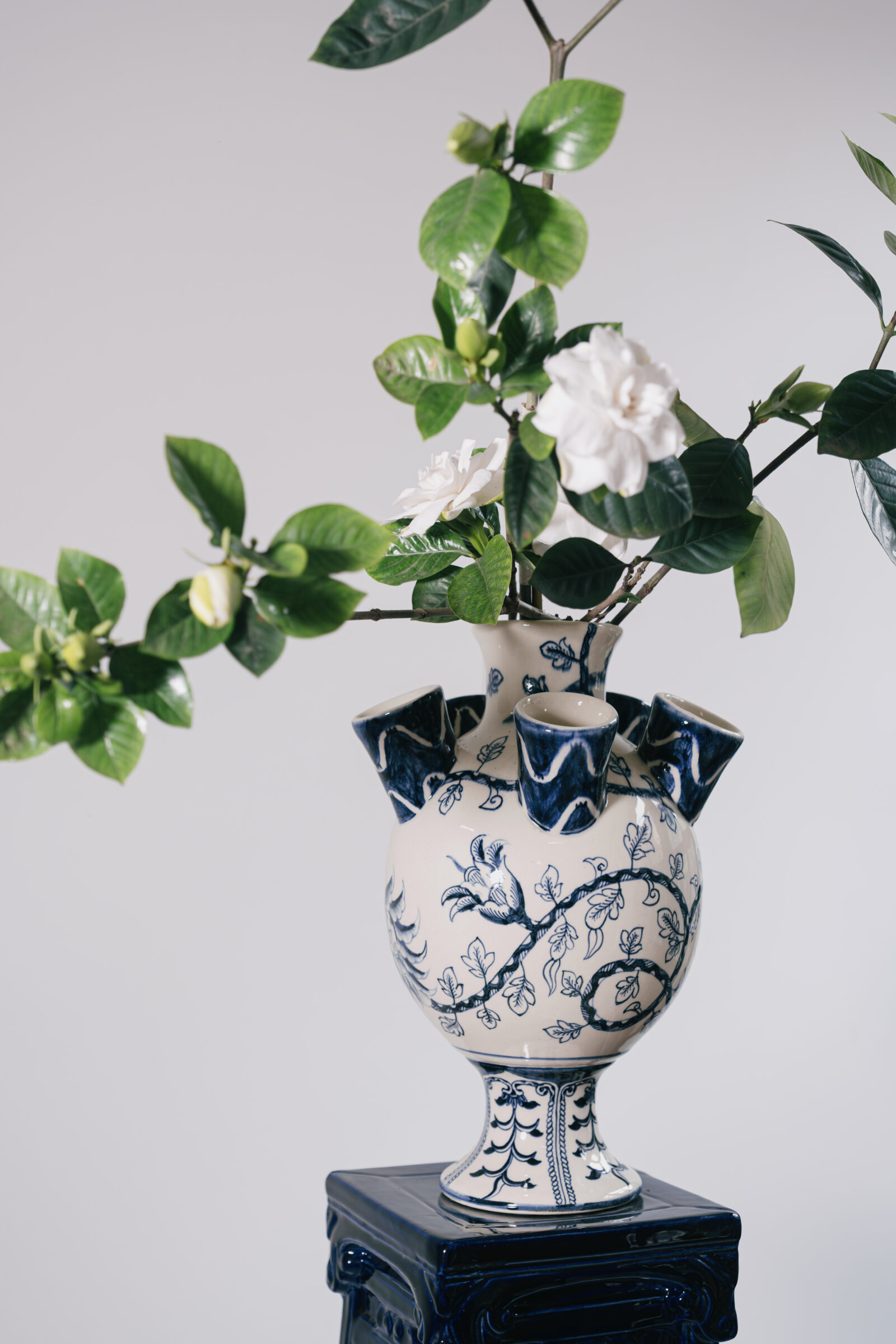
Many BTMA vessels have unusual forms, such as multi-spouted tulipieres. When faced with such a challenging structure, how do you approach the relationship between flowers and the vase?
Do you know this line of poetry?
“Standing between two streams of water, / Should one choose a direction, or simply let the water flow?”
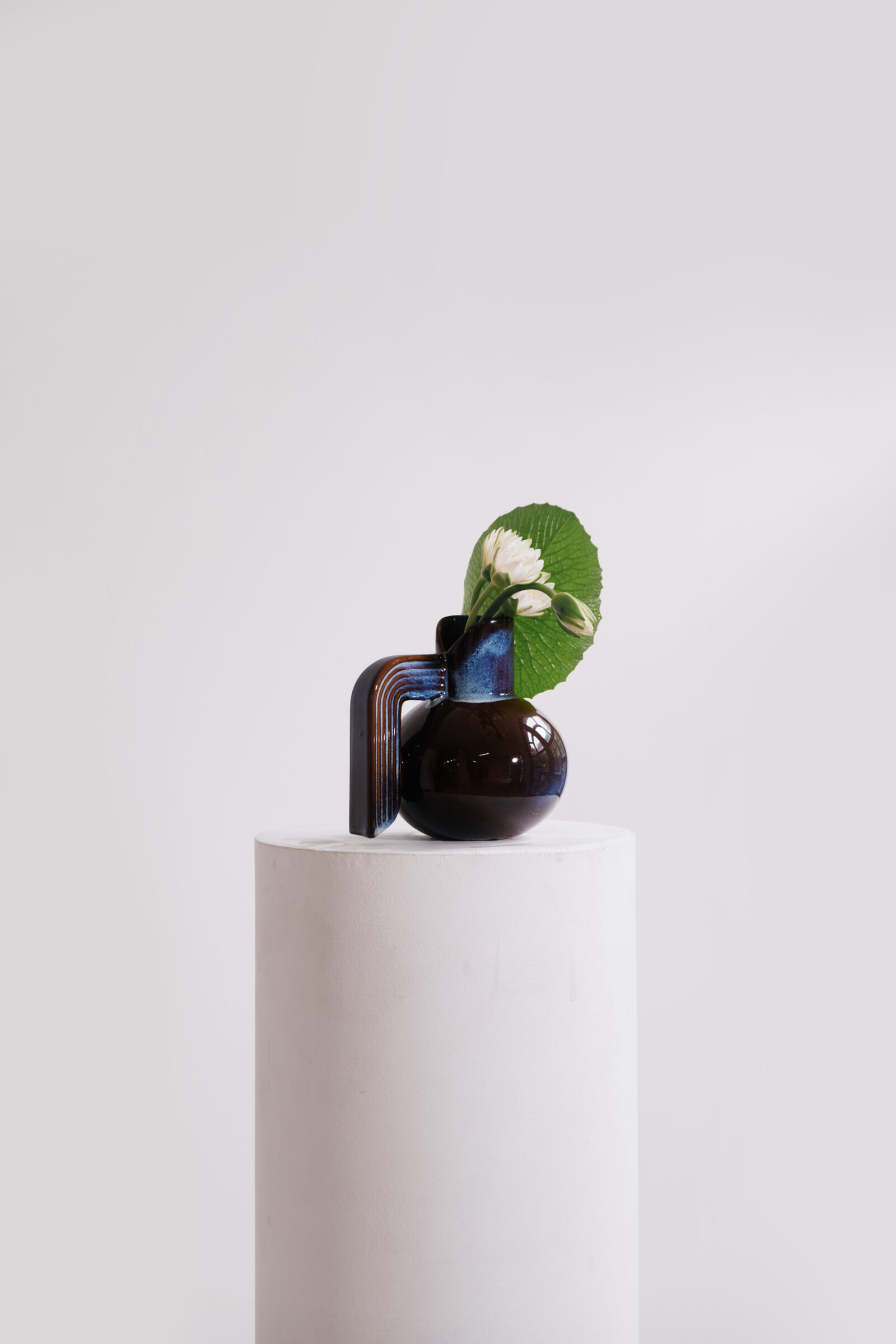
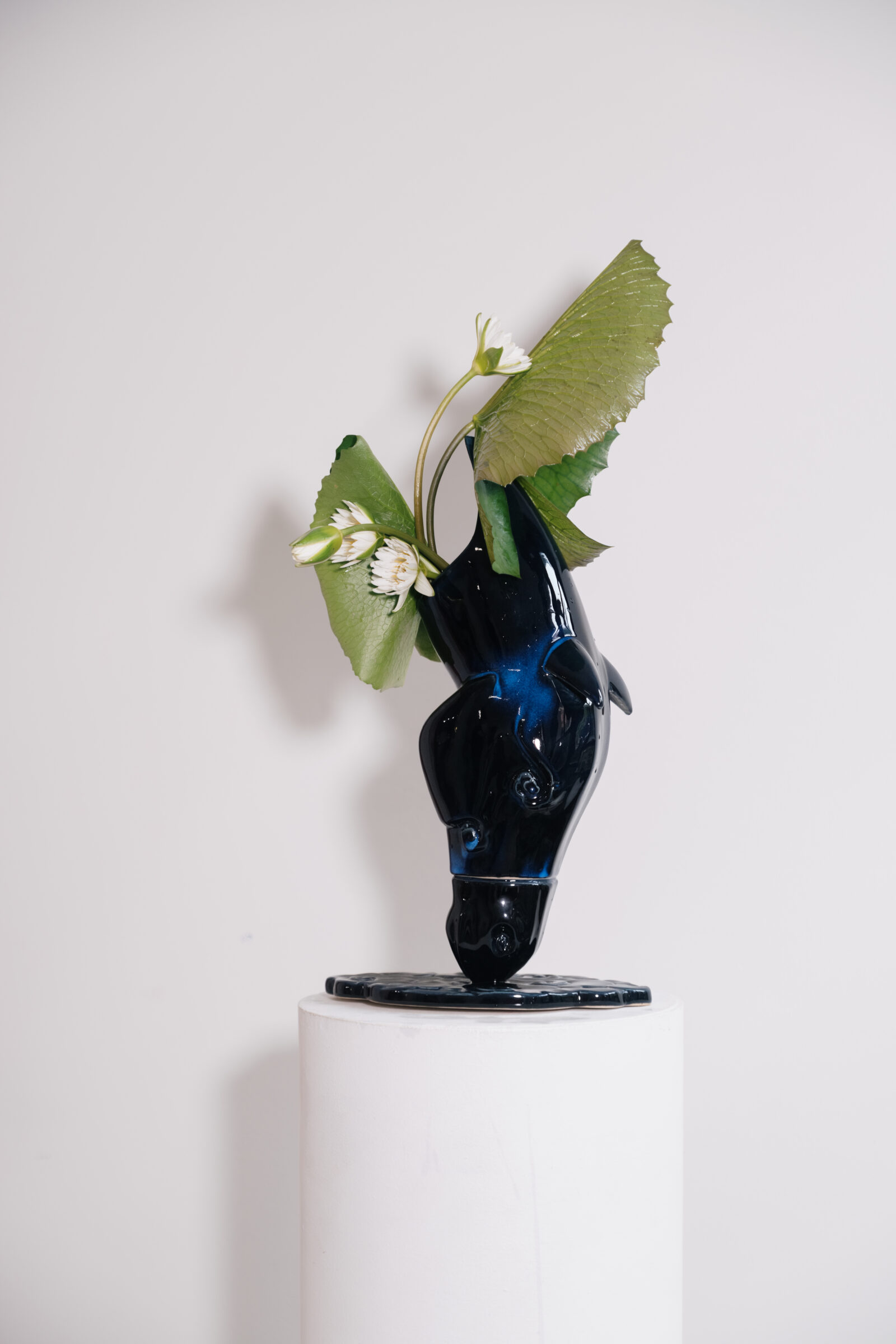
An unusual vessel always brings interesting emotions, but with a multi-spouted tulipiere, anyone would probably feel a little uncertain at first — as though standing between two streams. Perhaps I also choose to let the water flow. (laughs) In truth, these forms are not limitations; they are creative suggestions. I usually begin by “reading” the structure of the vase through its different directional movements, then selecting flowers whose lines are flexible enough to follow that flow. Rather than filling the arrangement densely, I prefer restraint and breathing space, allowing each detail to emerge clearly. I often choose flowers from the Memory Garden that can stretch, lean, or cascade naturally with each spout, creating a continuous sense of movement between flower and vessel.
Many people are intimidated by highly sculptural vases because they seem difficult to arrange. From your experience, what advice would you give?
I think even a single type of flower or branch can already create harmony and balance. With vessels that have intricate structures or strong decorative details, the flowers themselves should be restrained. More is not always more beautiful. As people often say, “less is more.” The vase itself is already a complete artwork, so sometimes just a single pomelo blossom or areca branch is enough to create elegance. The more details we add, the easier it becomes for the arrangement to lose its focus.
Art constantly evolves through cycles of repetition and inheritance. How do you view the changes happening in contemporary floral art today?
In nature, flowers are already beautiful without embellishment. But in art, I believe thoughtful combinations can add new emotional layers and create another life for the work. I’ve also experimented with many different materials — sometimes only leaves, bundles of straw, or wild grasses. Beyond flowers, I find inspiration in painting, music, photography, and ceramics. To me, installation art becomes most compelling when there is harmony between materials, colors, space, and emotion. As society becomes increasingly shaped by digital life, I think floral art and handmade practices will become even more essential, because genuine emotion and human connection can never truly be replaced. These are the spaces where people can touch, feel, and find resonance with one another.
What have you learned from stepping outside your comfort zone and working with unfamiliar materials or environments?
Every new journey comes with pressure — adapting to new people, new places, and finding the right materials. But those experiences have taught me to become more flexible and to trust my own emotions more deeply. I believe the further we step beyond our comfort zones, the more we realize that emotional honesty and inner grounding are what truly help us continue creating.
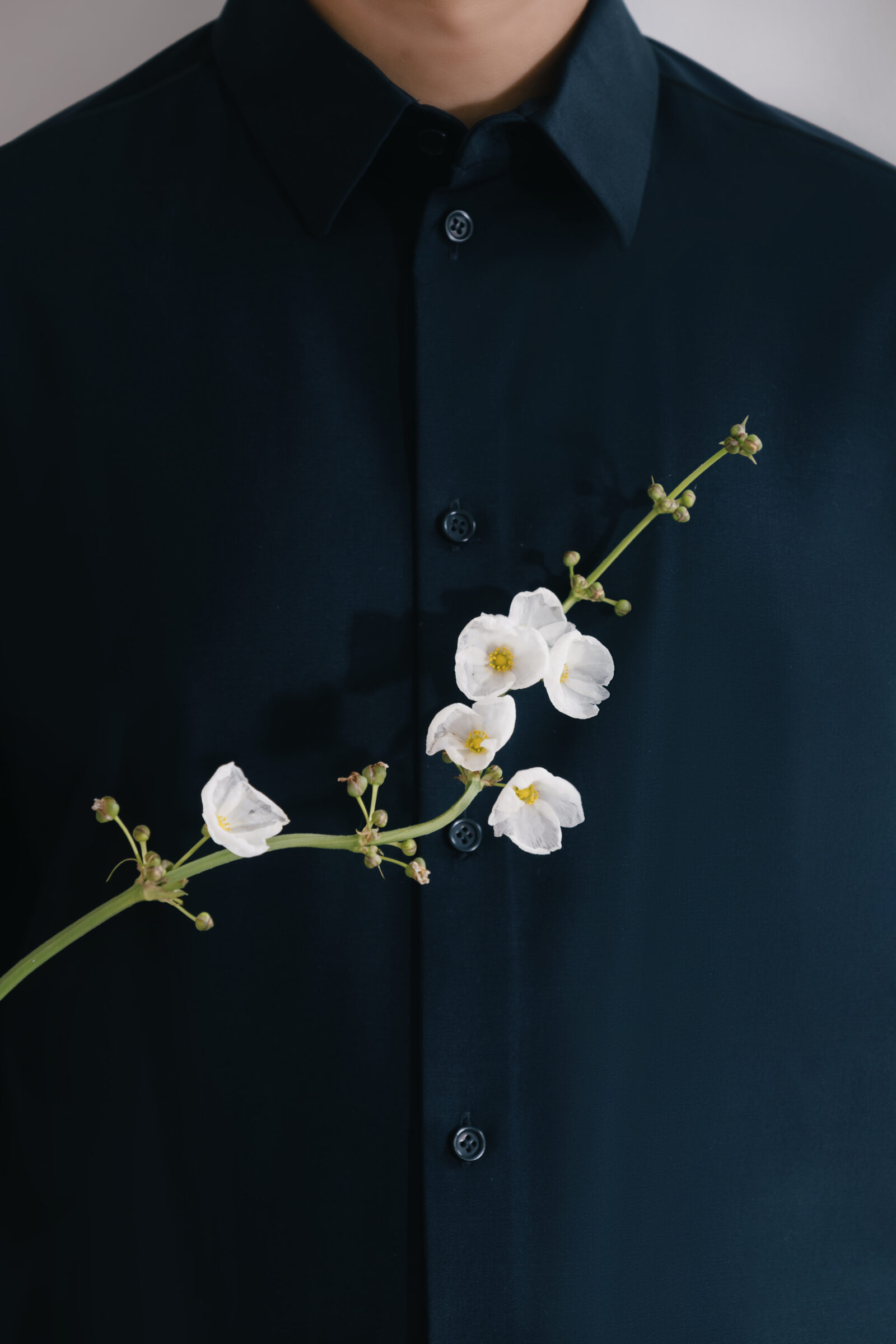
“Nature already allows plants to grow with such grace.”
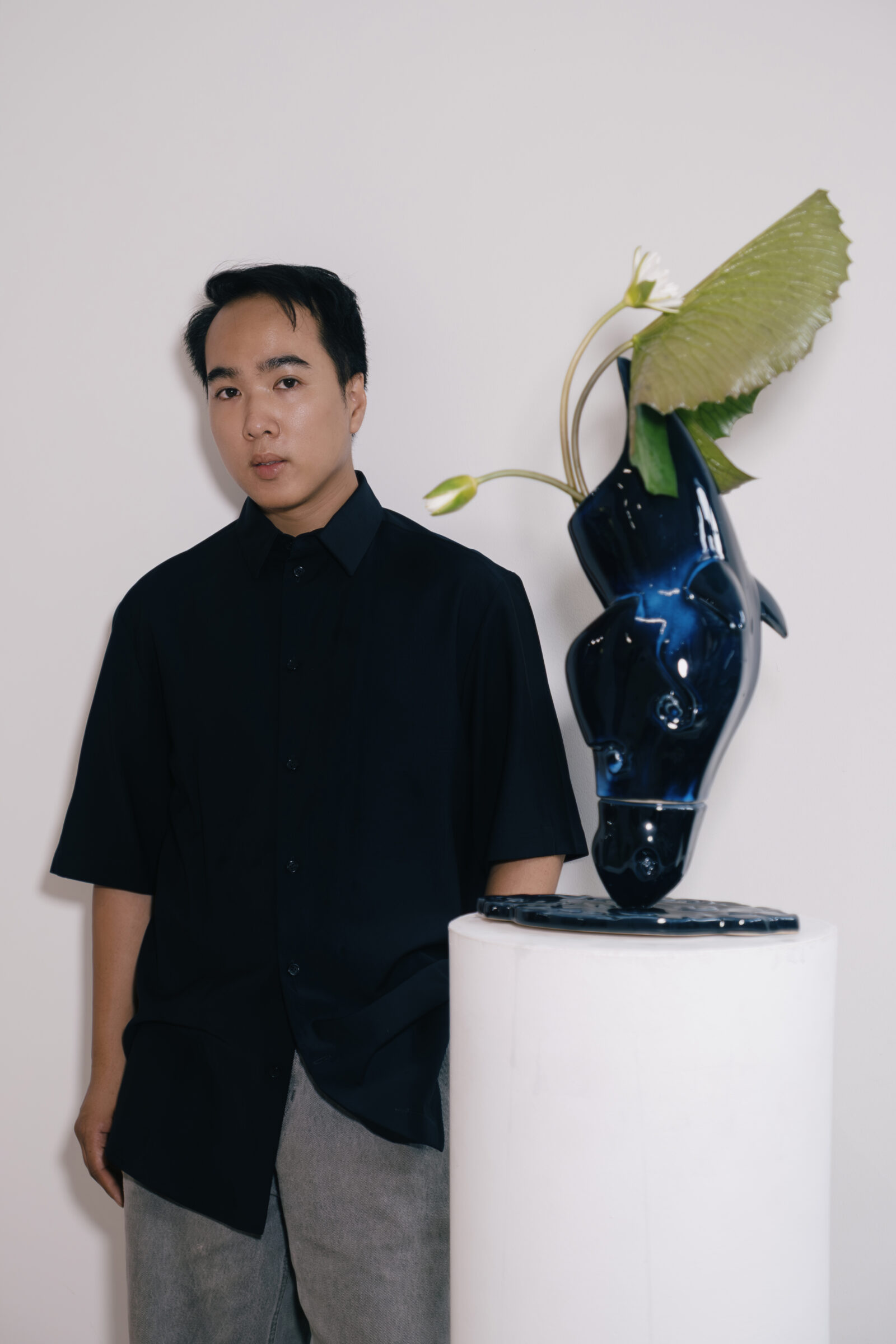
Observing and embracing the innate beauty of plants has become an enduring part of Vỹ Nguyễn’s floral practice. For him, the ceramic designs of BTMA create a connection between nature and traditional craftsmanship.
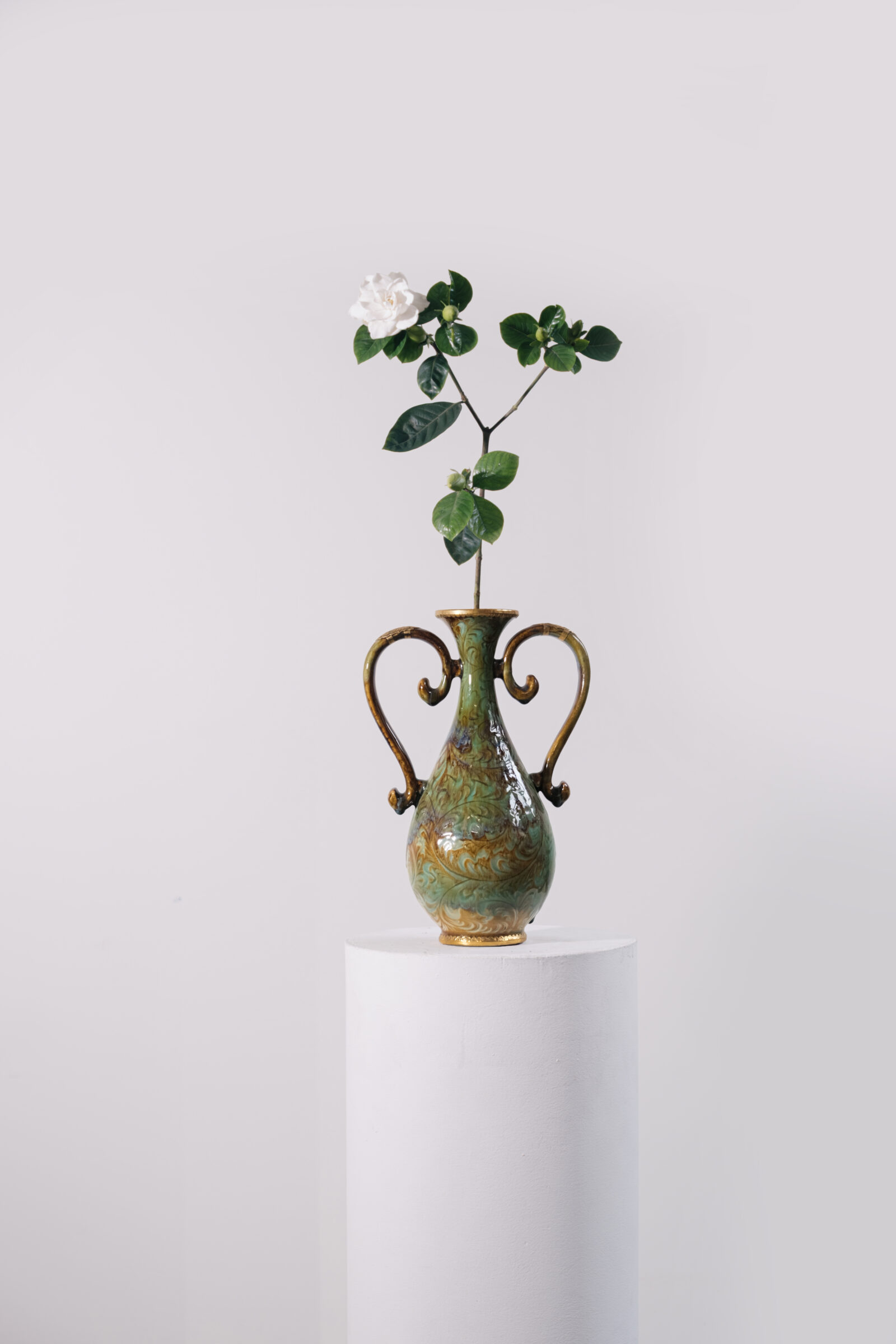
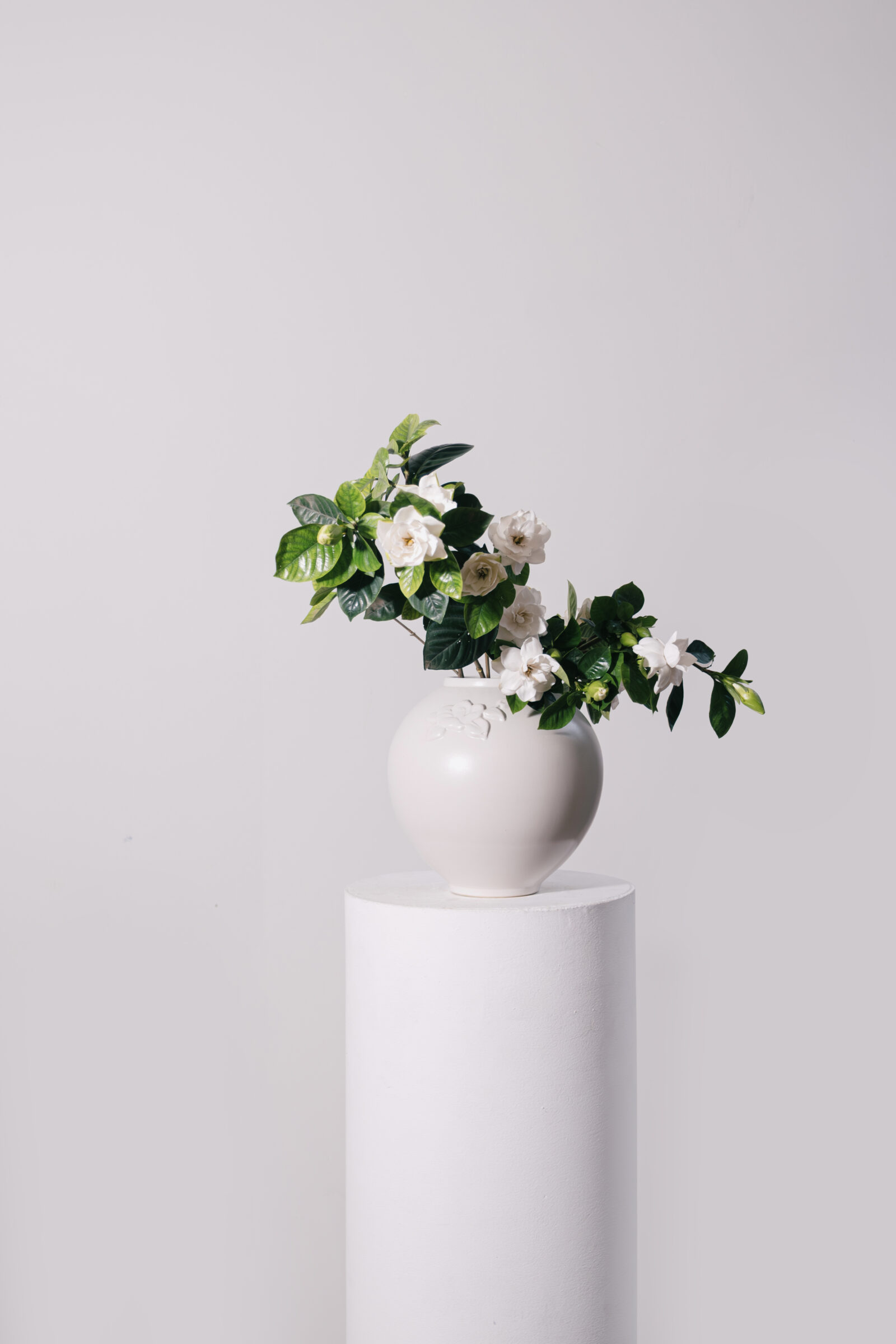
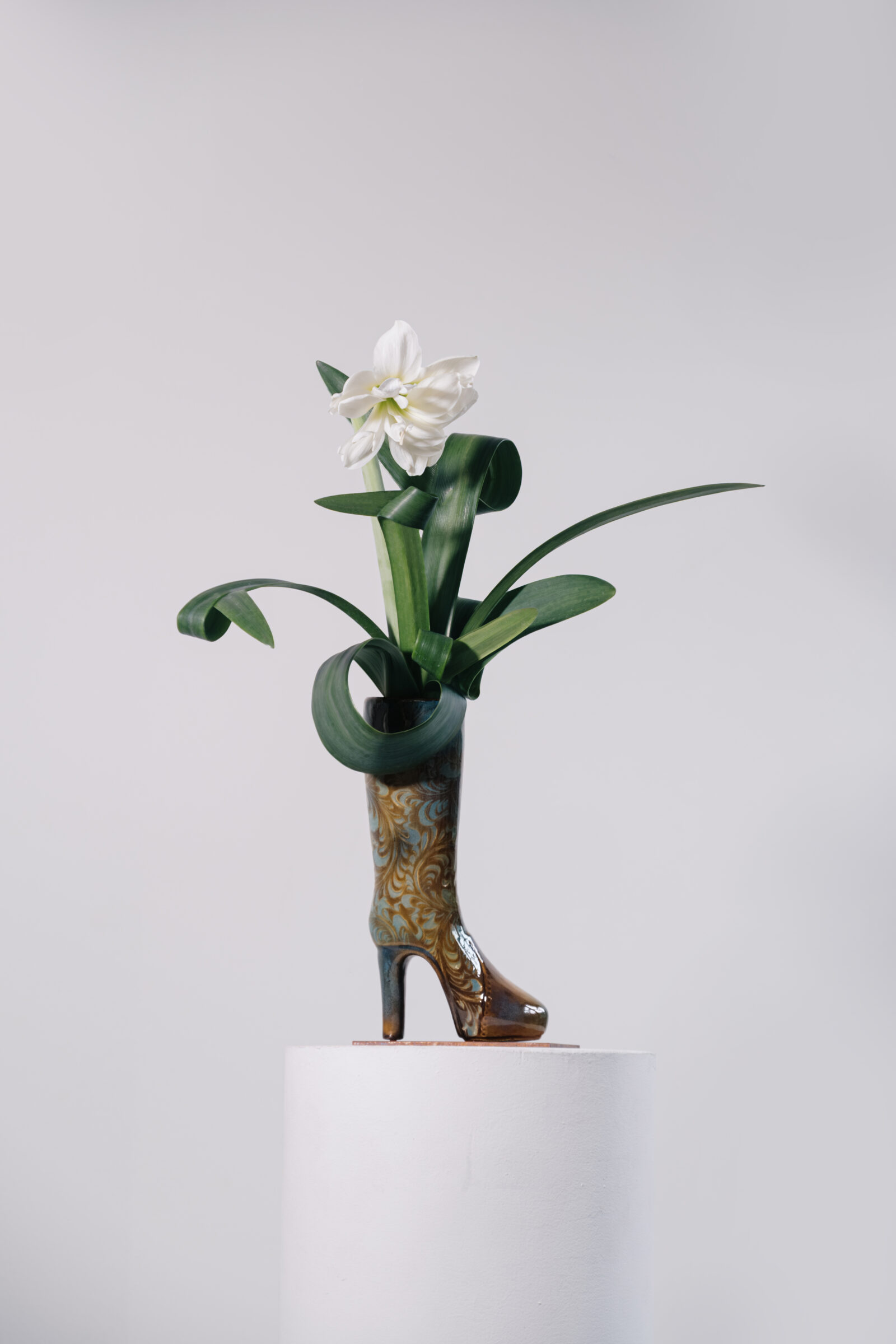
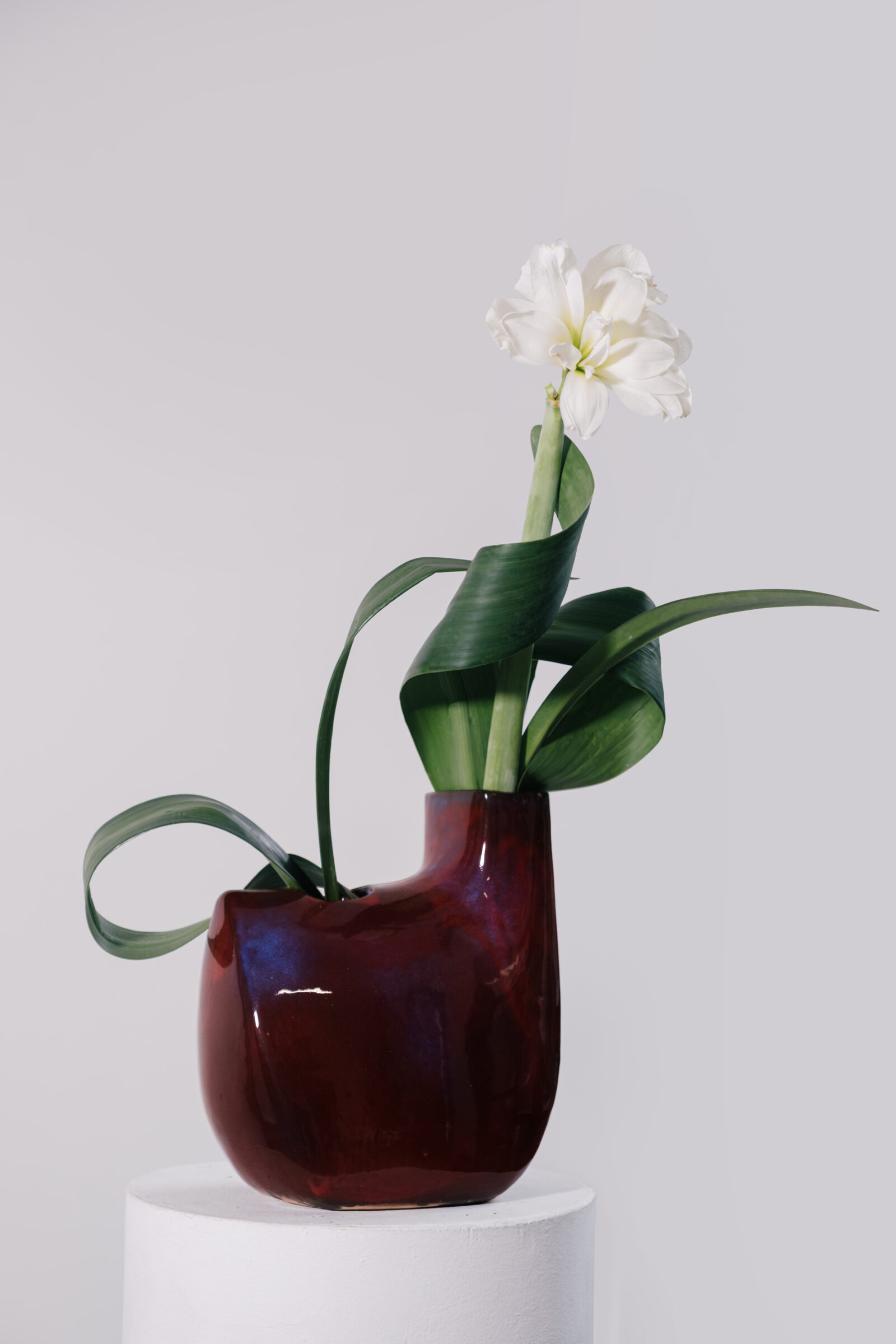
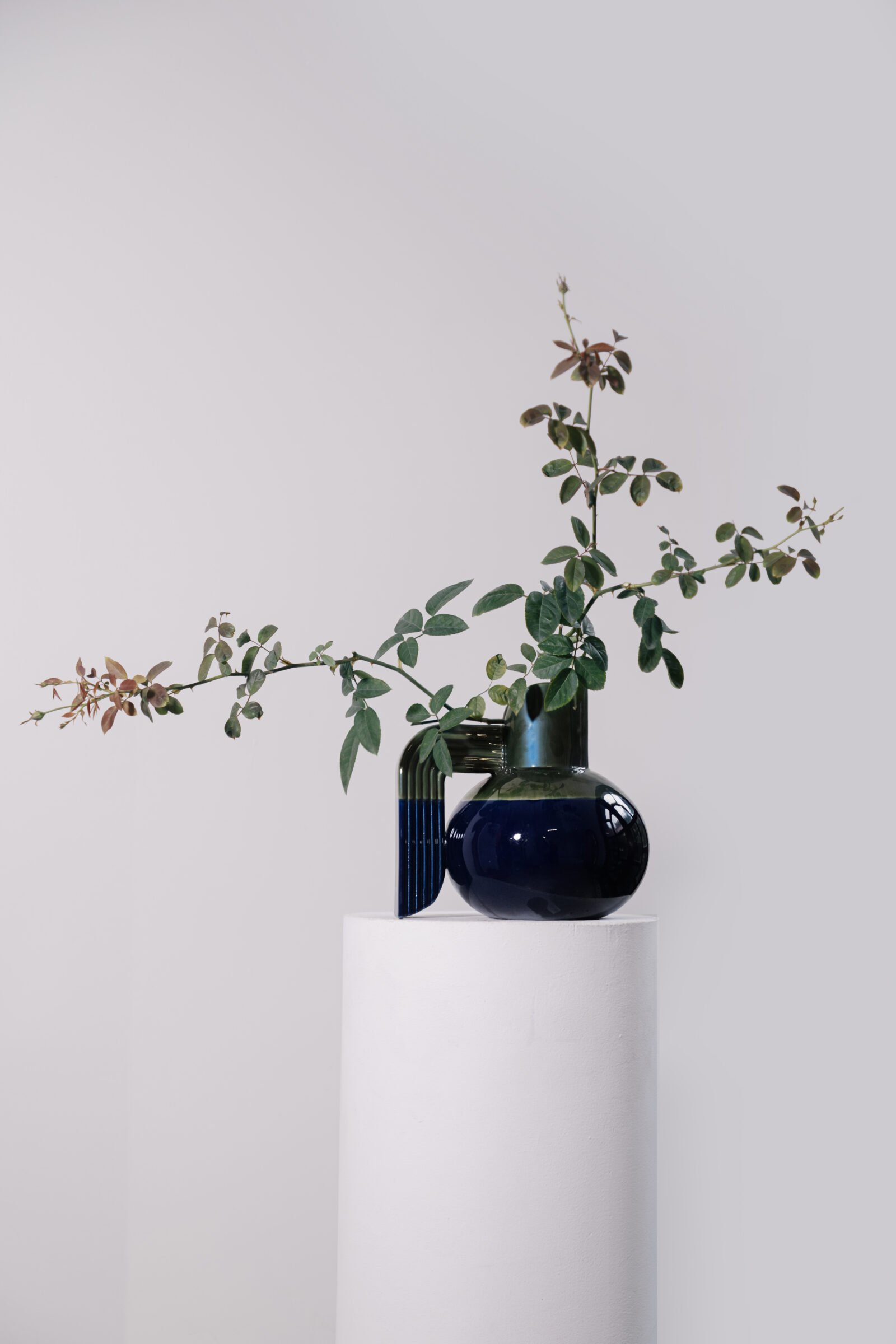
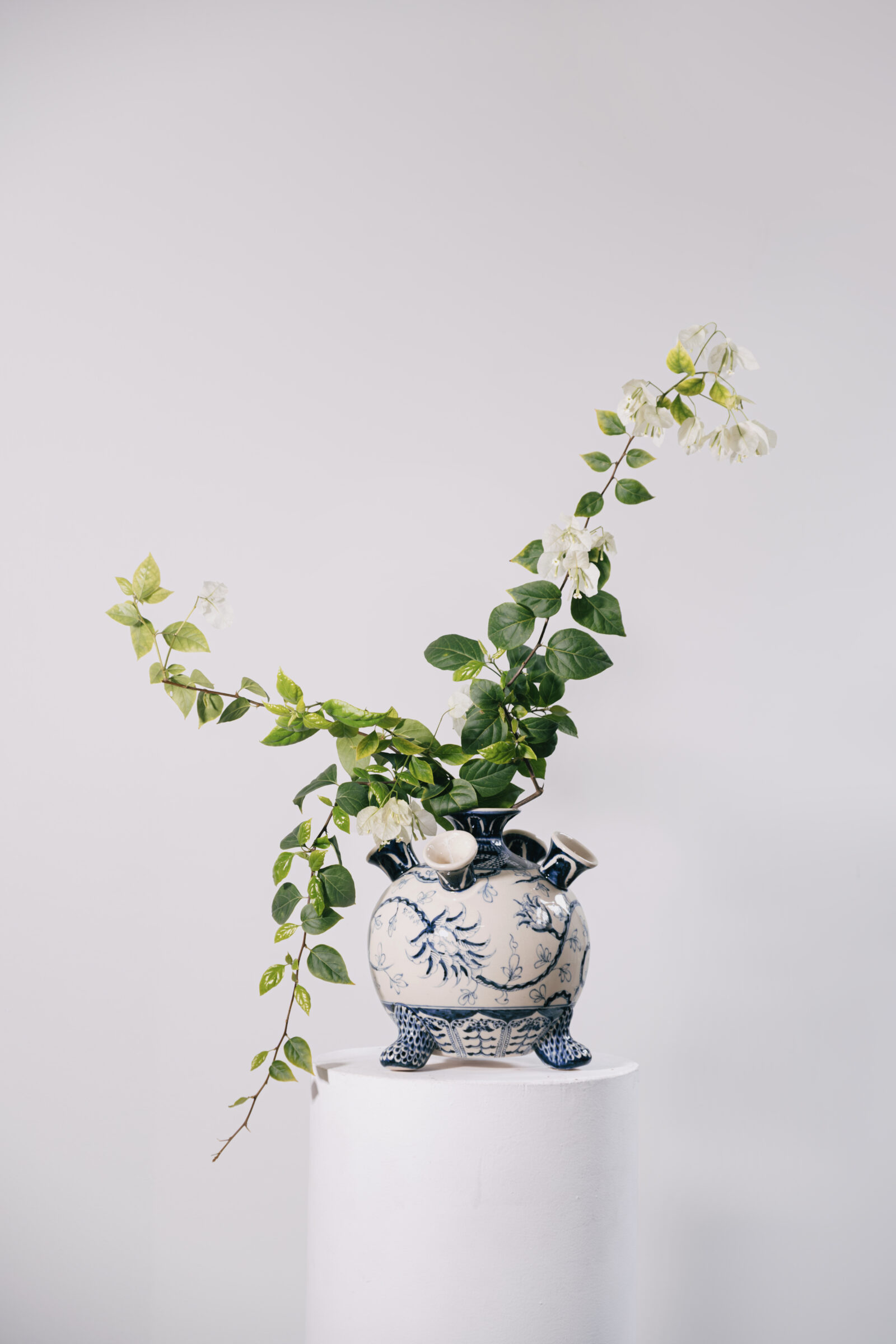
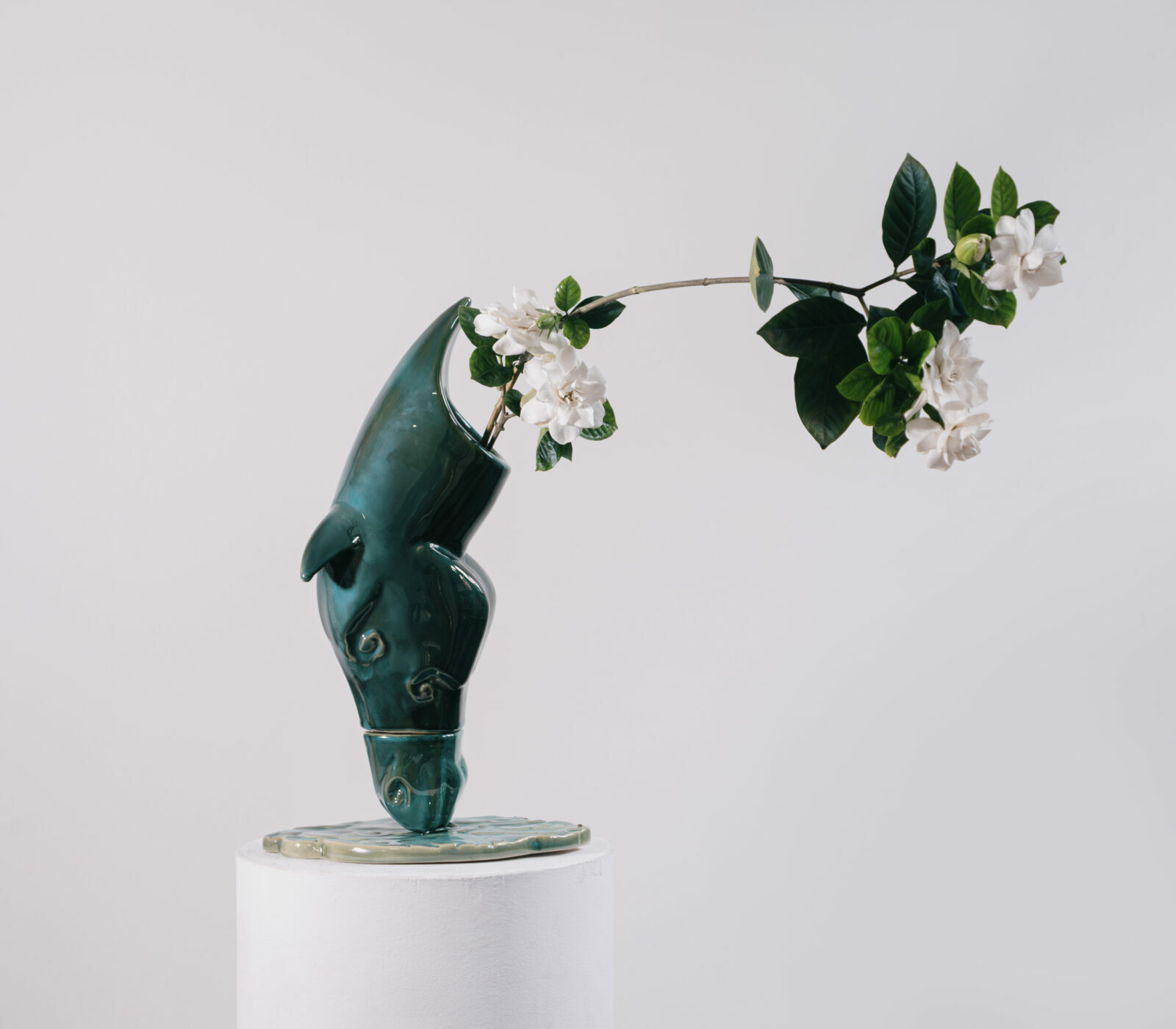
Following the journey of Vỹ Nguyễn, one begins to see that the consistency in his artistic practice comes from profoundly simple things: the way he cherishes the life cycle of every flower, or his willingness to “let the water flow” rather than control every form. He is not searching for grand artistic manifestos. Instead, he preserves a quiet inner space where the artist’s emotions can remain close to earth, ceramics, and the most modest flowers from the Memory Garden at Bát Tràng Museum.
For Vỹ Nguyễn, stepping beyond the comfort zone is not merely about experimenting with new materials or unfamiliar spaces. It is also a way of understanding himself more deeply, finding harmony with nature, and ultimately returning to nurture the soul through the quiet beauty found within the Memory Garden.